WebinarNinja Editorial Team is a diverse group of professionals passionate about webinars, sales, and marketing. We update you on the latest trends, dive into technical topics, and offer insights to elevate your business.
Meeting-first software lacks robust registration, engagement, and reporting—driving educators, trainers, and marketers to webinar-first platforms for higher attendance and measurable impact.
6-part framework evaluates alternatives by real reviews, core features, ease of use, support under load, value for money, and hands-on experience—favoring webinar-first tools.
Choose a webinar-first platform matched to your use case—run live, hybrid, or automated sessions with built-in payments, reminders, engagement tools, replays, and analytics.
If you are looking for some cool and smart Zoom webinar alternatives, I have got you covered in this blog.
As someone who’s worked in the SaaS and digital training industry for the past few years, I’ve found that Zoom’s webinar tool hasn’t incorporated the latest webinar features that educational and business trainers prefer.
No wonder they are looking for better options.
Here, I have compiled a list of some of the best Zoom webinar alternatives and competitors that can offer you better outcomes with respect to your educational, training, or marketing needs.
Let’s get started.
What I Mean By “Zoom Webinar Alternatives” in This Post
When I say “Zoom webinar alternatives”, I’m talking about tools built specifically for running webinars, not just video calls. These platforms usually give you stronger registration and reminder flows, better audience engagement (polls, Q&A, chat), and more useful reporting. If you’re teaching, training, or marketing through webinars, this is the feature set that matters most.
Here are some tools that work well in place of Zoom:
Tool
Best Use Case
Starting Cost
WebinarNinja
Best Webinar Software to Generate Leads, Grow Sales, and Teach Better
A FREE 14-day trial available. Paid starts at $0.30/attendee/month (includes CourseNinja worth $1200).
Webex Webinars
Interactive Webinar experiences
Starts at $68.75/license/month.
ClickMeeting
Educational Online Courses
Starts at $26/host/month. Billed annually.
Hopin
Virtual Conferences
Starts at $20/user/month. Billed annually.
GoTo Webinar
Lead Generation
Starts at $49/organizer /month, billed annually.
BigMarker
Interactive Webinars and Workshops
Custom pricing.
Zoho Meeting
Small Business Meetings
Starts at $1/month for 10 participants. Billed annually.
Adobe Connect
Customizable Virtual Rooms
Starts at $190/year/host for up to 100 participants.
ON24
Virtual Events
Custom pricing
WebinarJam
Sales and Marketing Webinars
Starts at $39/month/host for 100 attendees.
Top 10 Zoom Webinar Alternatives & Competitors
I compared each tool above using real-world criteria like core webinar features, engagement tools, automation, analytics, ease of use, integrations, customer support, and overall value for money. (I’ve also shared the full evaluation criteria later in this post.)
1. WebinarNinja
Having used WebinarNinja extensively for various coaching sessions, I’ve found its all-in-one platform to host a webinar incredibly enriching for the users.
It is a good tool for marketers, businesses, consultants and coaches. with its suite of engagement tools like live polls, Q&A sessions, chat features, and the ability to integrate payment options for monetized events seamlessly.
Setting up a full webinar funnel, from registration page to post-session follow-up, takes minutes rather than hours of stitching tools together. Branded landing pages improve sign-up rates, live and automated formats are both included, and every registrant is integrated automatically to HubSpot, Mailchimp, ConvertKit, or your CRM via Zapier.
In-session timed offers and polls keep conversion momentum going throughout the webinar. Analytics surface buyer intent signals and engagement data that Zoom’s basic reporting simply doesn’t provide, giving me a much clearer view of what’s actually driving results.
Pros:
All-in-one webinar solutions, including live, automated, series, and hybrid webinars.
Provides unlimited webinar replays and attendee registrations.
Intelligent engagement tools, including polls, live chat, exclusive deals, coupons, handouts, and others.
The Next Webinar Challenge that helps you launch and create your first (or next) automated webinar from scratch in just 30 days.
Sync every registrant to HubSpot, Mailchimp, ConvertKit, or your CRM automatically via native integrations.
Surface buyer intent with analytics covering registrations, attendance, offer clicks, and post-webinar engagement.
24/7 customer support service dedicated to solving any problems you may encounter.
Cons:
It would do better with a mobile application for on-the-go webinars.
There should be an option to switch to the dark mode.
Price: A FREE 14-day trial available. Paid starts at $0.30/attendee/month (includes CourseNinja worth $1200).
2. Webex Webinars
Best for Interactive Webinar Experiences
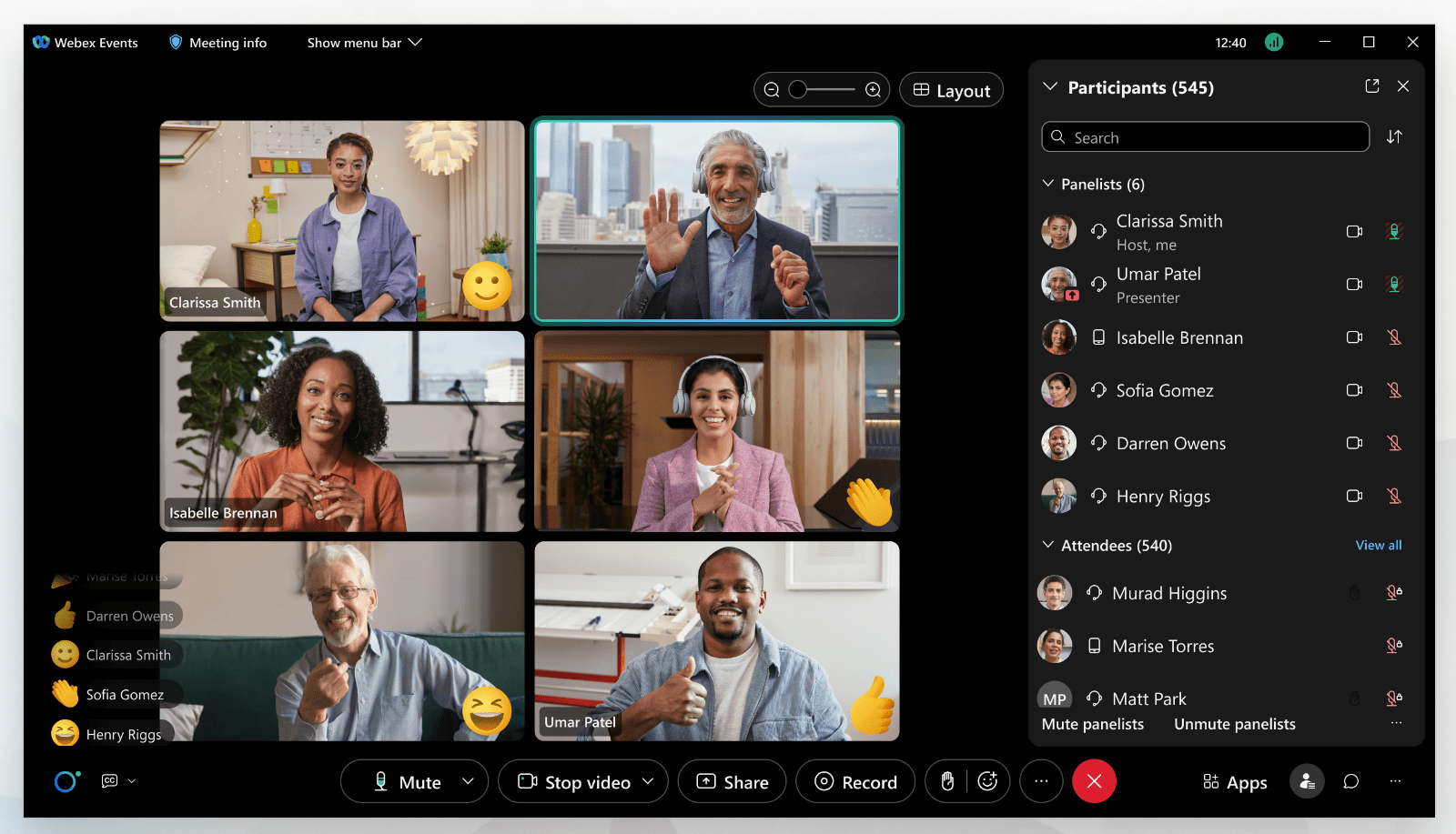
In the corporate world, Webex Webinars has proved to be an excellent alternative to Zoom due to its robust, secure, and scalable features.
It excels in hosting corporate webinars and training sessions with capabilities that include high-definition video, extensive participant management tools, and advanced security measures to protect sensitive information.
I really like how it supports a large number of participants without compromising on quality or performance, especially for organizations that prioritize data security and reliability.
Not to forget, Webex’s comprehensive suite of collaboration tools, such as file sharing, whiteboarding, and breakout sessions, enhances team interaction, making it a go-to solution for corporate environments looking for a more specialized webinar experience.
Pros:
Robust security features suitable for corporate environments.
High-capacity events, supporting thousands of participants.
Integration with the broader Cisco Webex ecosystem for a unified communication experience.
Advanced features for audience engagement, such as polls, Q&A, and breakout sessions.
Record and edit your webinars and share them with your audience via email or social media.
Cons:
The interface can be complex for new users.
Requires a stable, high-speed internet connection for optimal performance.
Price: Starts at $68.75/license/month.
3. ClickMeeting
Best for Educational Online Courses
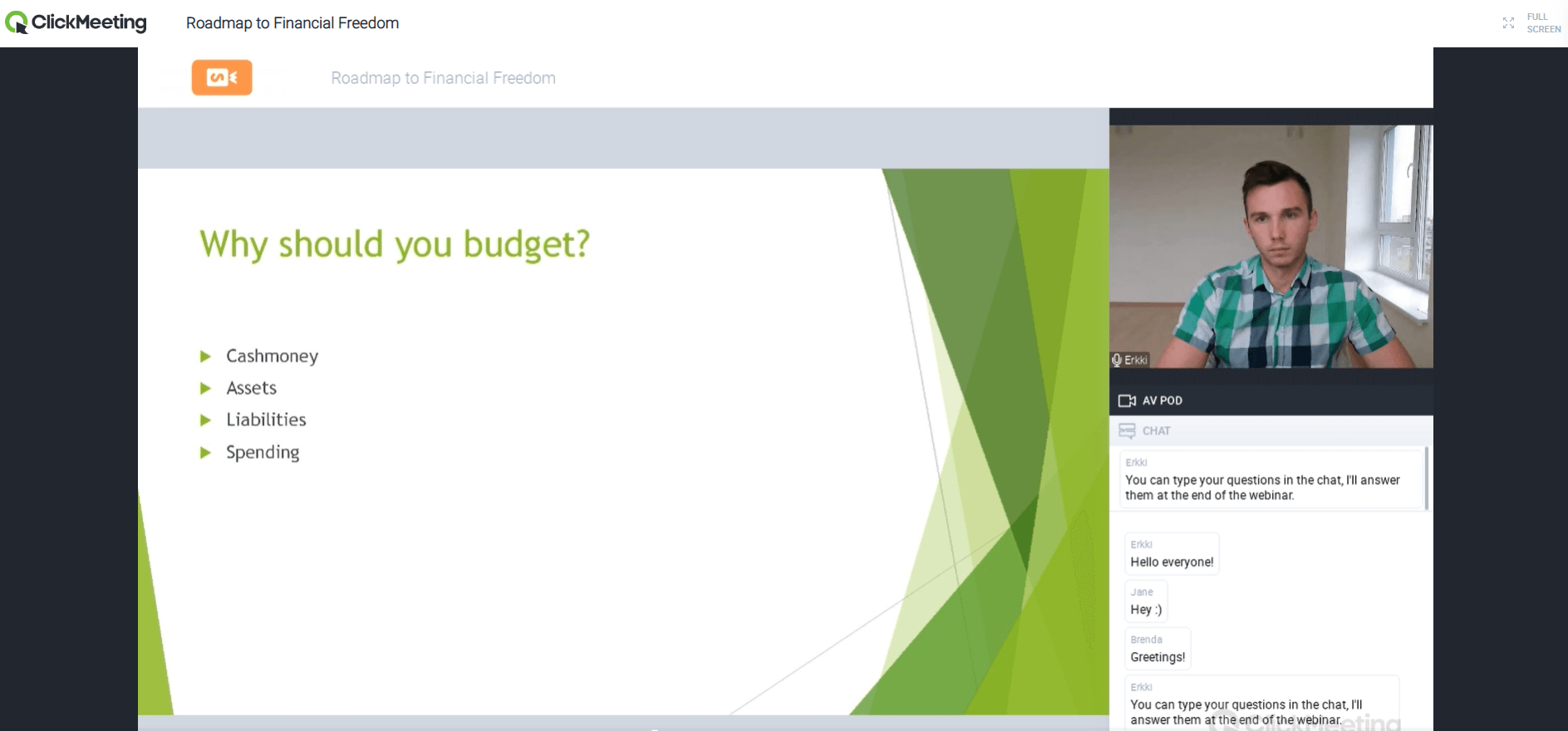
My experience with ClickMeeting has solidified its position as a leading platform for educational online courses, thanks to its intuitive design and specialized tools aimed at enhancing the learning experience.
Its features, like interactive whiteboards, customizable tests, and in-depth analytics, allow educators to engage with students in a dynamic manner. ClickMeeting’s emphasis on education makes it an excellent alternative to Zoom, providing an environment that’s tailored to the needs of educators and learners alike.
I love its ability to host webinars that are both informative and interactive, along with its ease of access for participants, ensuring a smooth and effective online learning experience.
Pros:
Enrich your webinars with multimedia content, such as videos, slides, documents, and whiteboards.
Allows you to monetize your webinars with paid access, donations, or subscriptions.
Integration with popular learning management systems and other tools such as Moodle, PayPal, Zapier, and more.
Mobile access that allows participants to join from anywhere.
Customizable registration forms to gather relevant attendee information.
Cons:
Video quality may vary based on the participant’s internet connection.
The analytics feature needs more depth for detailed insight.
Price: Starts at $26/host/month. Billed annually.
4. Hopin
Best for Virtual Conferences
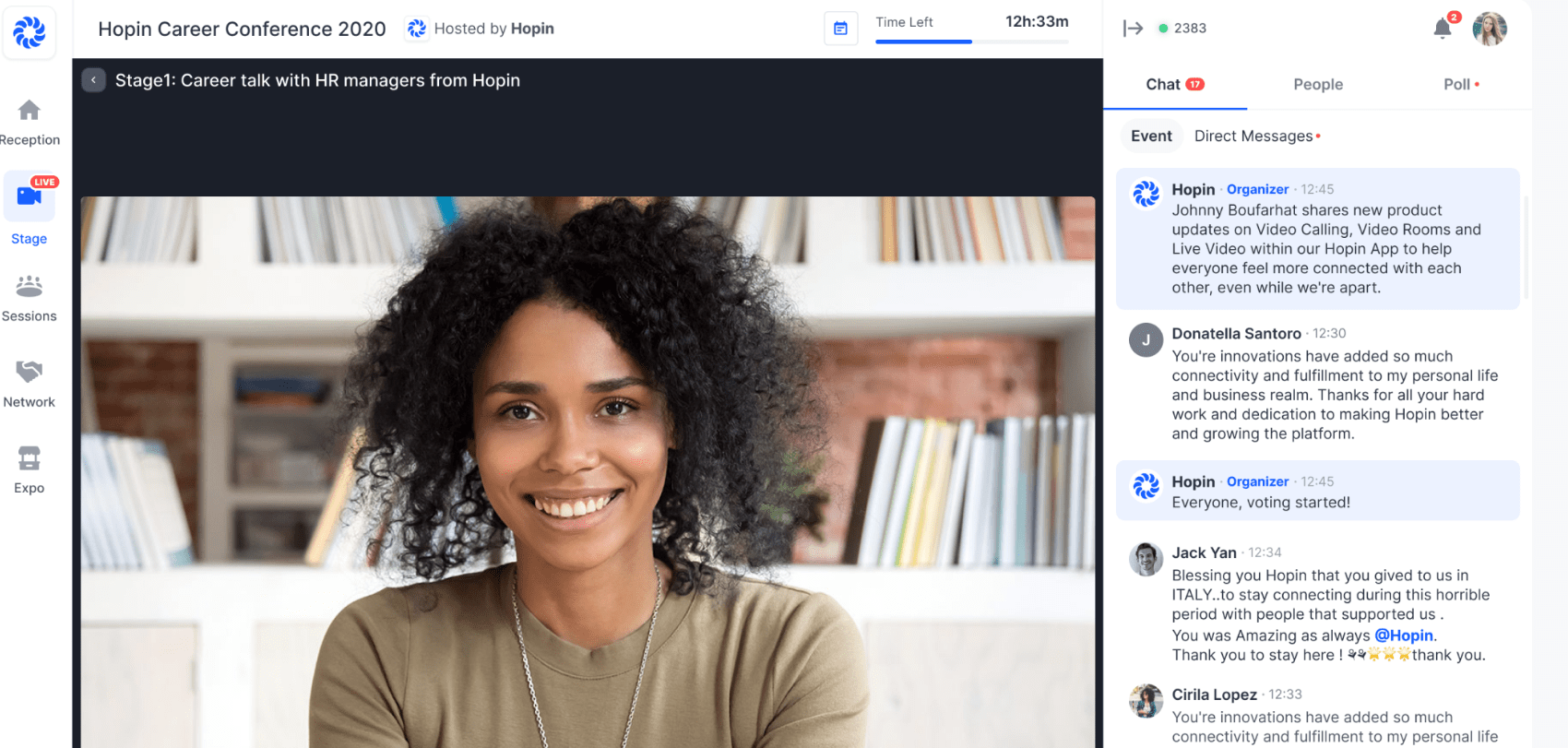
Hopin has revolutionized the way people host virtual conferences, offering a comprehensive set of tools that mimic the feel of in-person events.
Its features for networking, virtual booths, and multiple interactive stages provide a rich, engaging experience for attendees. I actually love its flexibility in hosting events of any size, combined with its robust performance, which makes it one of the best alternatives to Zoom webinars for those organizing large-scale virtual conferences.
Hopin’s ability to create immersive experiences with options for live interaction, polling, and Q&A sessions enriches participant engagement, making it an ideal choice for event organizers seeking a versatile and engaging platform.
Pros:
Create immersive and interactive events with features such as stages, sessions, expo booths, chat, polls, Q&A, and gamification.
Easily scalable from small meetings to large-scale conferences.
You can easily integrate Hopin with various tools such as Eventbrite, HubSpot, Zapier, and more.
Customizable event stages, booths, and breakout sessions for diverse needs.
Record and store your events and share them with your audience via email or social media.
Cons:
Can be costly for larger events.
Customer support response time is slow during peak times.
Price: Starts at $20/user/month. Billed annually.
5. GoTo Webinar
Best for Lead Generation
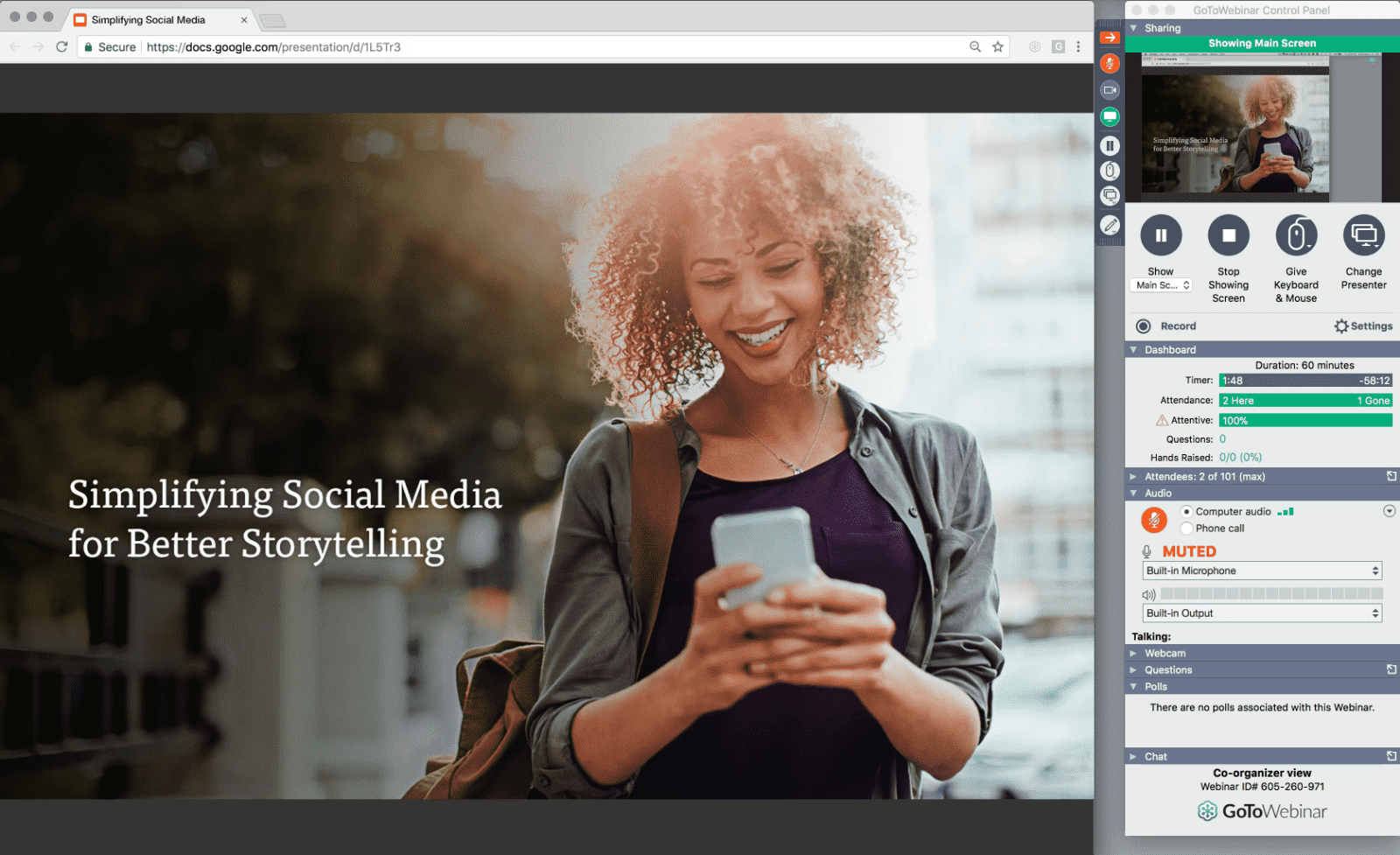
If you believe the experiences of my industry colleagues, using GoTo Webinar for lead generation campaigns has proven to be exceptionally effective.
The platform’s specialized marketing tools, such as customizable registration pages, automated follow-up emails, and detailed analytics, are designed to optimize lead capture and nurturing processes. Its reliability and integration with CRM systems enhance lead management efforts, offering a strategic competitor to Zoom for marketers focused on lead generation.
GoTo Webinar’s emphasis on marketing efficiency provides a seamless experience for both organizers and attendees, making it particularly suitable for businesses looking to enhance their lead-generation strategies.
Pros:
Offers automated webinars for reaching audiences across time zones.
Offers extensive customization options for branding and designing your webinars as per your requirements.
Advanced registration and attendee tracking features for better reports.
Interactive tools like polls, surveys, and Q&A to engage participants.
Enrich your webinars with multimedia content, such as videos, slides, documents, and screen sharing.
Cons:
The user interface appears dated compared to newer platforms.
Limited video marketing features for post-webinar engagement.
Price: Starts at $49/organizer/month, billed annually.
6. BigMarker
Best for Interactive Webinars and Workshops
BigMarker is my preferred platform for hosting interactive webinars and workshops. Its comprehensive set of engagement tools, including live polls, Q&A, and social media integration, supports highly interactive sessions.
I like its dedication to creating an immersive learning and collaboration environment, and this can make it a good Zoom webinar alternative for those aiming to conduct workshops that require active participant involvement.
It has breakout rooms that facilitate small group discussions and collaboration. Besides, integrations with tools like Google Drive and Slack enhance productivity and content sharing.
Pros:
Allows the creation of customizable landing pages and emails for effective branding.
Ensures high-quality video and audio for a professional webinar experience.
Offers white-labeling solutions for a branded experience.
Supports on-demand and automated webinars for better flexibility.
Contains robust analytics for detailed insight into attendee behavior and preferences.
Cons:
There is a limit of 10,000 attendees per webinar, which may not be enough for some mega-events.
It does not support certificates or gamification for more educational sessions.
Price: Custom pricing.
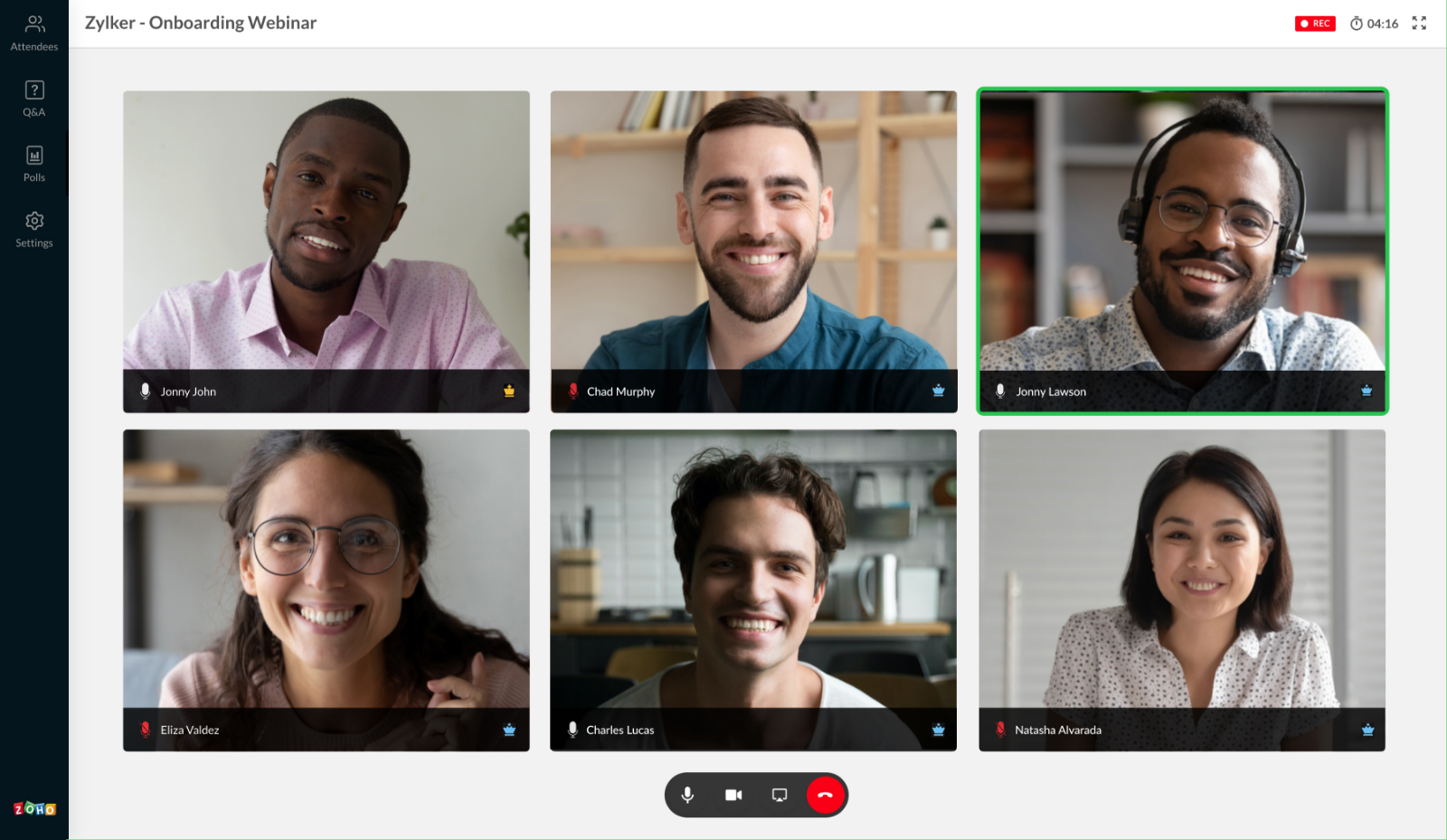
7. Zoho Meeting
Best for Small Business Meetings
Zoho Meeting has emerged as an invaluable tool for small business meetings due to its simplicity, affordability, and seamless integration with other Zoho apps.
Its seamless interface and essential features like screen sharing, recording, and easy-to-use controls make it an efficient alternative to Zoom for small businesses. The platform’s focus on providing a hassle-free and effective meeting solution, without the need for extensive setup or training, suits the needs of small teams looking for reliable and cost-effective communication tools.
The platform is compatible with a range of devices, and its emphasis on security further enhances its appeal as a preferred choice for business meets.
Pros:
Host secure and reliable webinars with Zoho Meeting’s encryption, authentication, and compliance features.
Simple and intuitive interface for easy webinar setup and management.
Integration with various tools such as Zoho CRM, Zoho Campaigns, Zoho Projects, and more.
Features like screen sharing, recording, and replay for enhanced collaboration.
Mobile apps are available for hosting and attending meetings on the go.
Cons:
Does not support automated or evergreen webinars, only live and on-demand webinars.
Does not support breakout rooms, whiteboards, or certificates for interactive and educational sessions.
Price: Starts at $1/month for 10 participants. Billed annually.
8. Adobe Connect
Best for Customizable Virtual Rooms
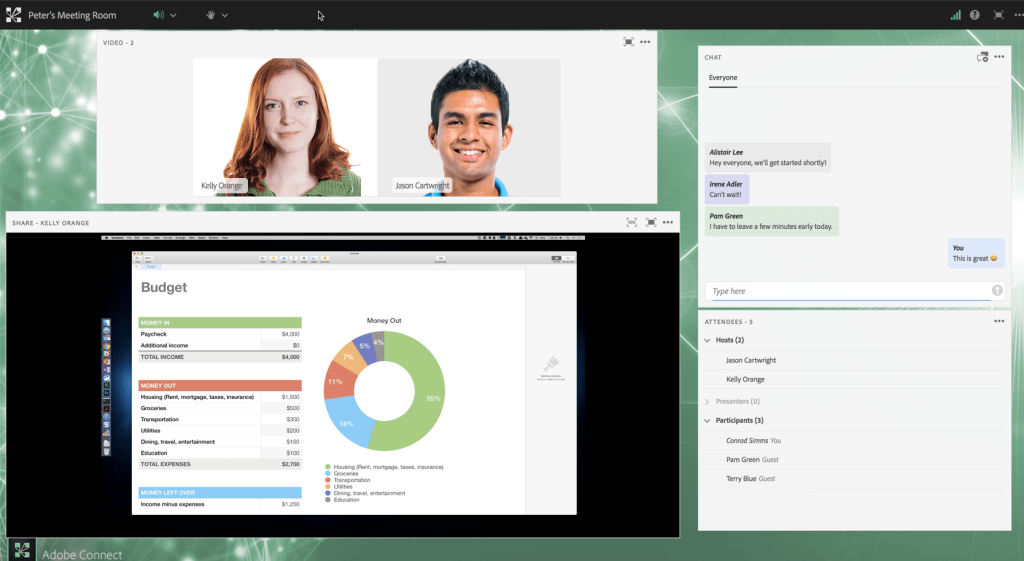
I really like how Adobe Connect creates highly customizable virtual training sessions. Its ability to design unique virtual rooms that can cater to specific training needs makes it unparalleled.
It has advanced features, such as breakout rooms, polls, and interactive elements, which allow for a tailored training experience, making it an innovative alternative to Zoom for specialized training programs.
Adobe Connect’s flexibility in customizing the look and feel of virtual rooms to match branding or training requirements provides a unique advantage, offering a personalized and immersive learning environment.
Pros:
Create unique and personalized webinars with features such as layouts, pods, templates, and extensions.
Host secure and reliable webinars with Adobe Connect’s encryption, authentication, and compliance features.
Breakout rooms for small group discussions within a larger webinar.
Compatibility with various content types, including multimedia and interactive modules.
Integrate Adobe Connect with various tools such as Adobe Captivate, Adobe Presenter, Adobe Analytics, and more.
Cons:
Higher learning curve due to complex features.
Requires a good and fast internet connection for full feature utilization.
Price: Starts at $190/year/host for up to 100 participants.
9. ON24
Best for Virtual Events
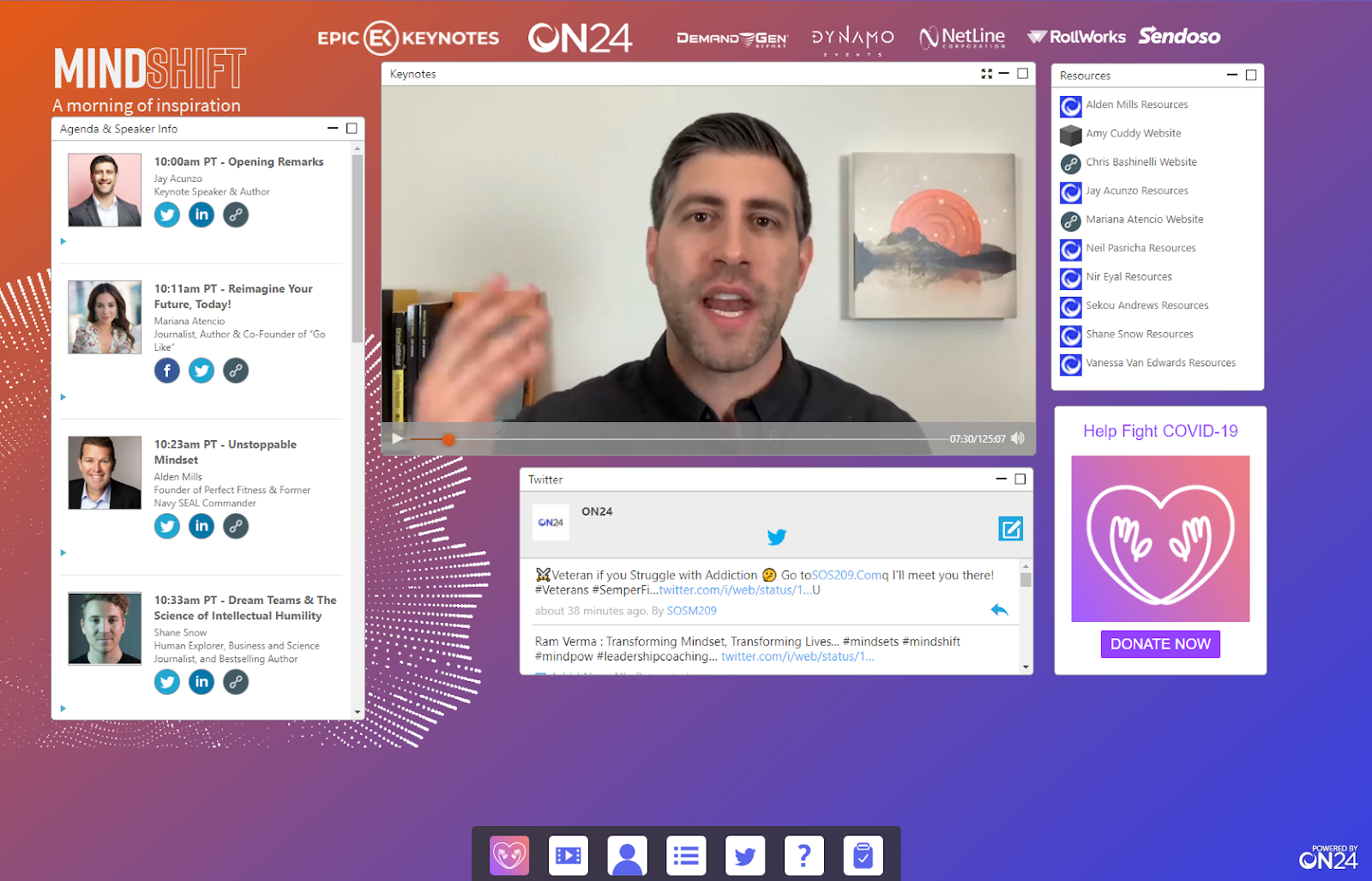
If you wish to get a Zoom webinar alternative for large-scale virtual events, you can go for ON24, which allows you to engage attendees in ways that go beyond traditional webinar platforms.
Its focus on interactive elements, such as live polling, chat, and networking opportunities, along with comprehensive analytics, makes it an exceptional Zoom alternative for hosting virtual events that require high levels of engagement and data insights.
ON24’s platform is designed to captivate audiences with immersive experiences, driving deeper interaction and providing valuable feedback through detailed analytics, making it ideal for organizations seeking to conduct impactful virtual events with measurable outcomes.
Pros:
Tailored for immersive virtual events and webinars with high engagement.
Offers a wide range of interactive tools, including polls, surveys, and Q&A.
Customizable branding and design options for virtual environments.
On-demand content capabilities to extend the life of your events.
Scalable to accommodate large audiences without compromising performance.
Cons:
Does not offer a free plan, only a free demo upon request.
Limited customer support options for immediate troubleshooting.
Price: Custom pricing
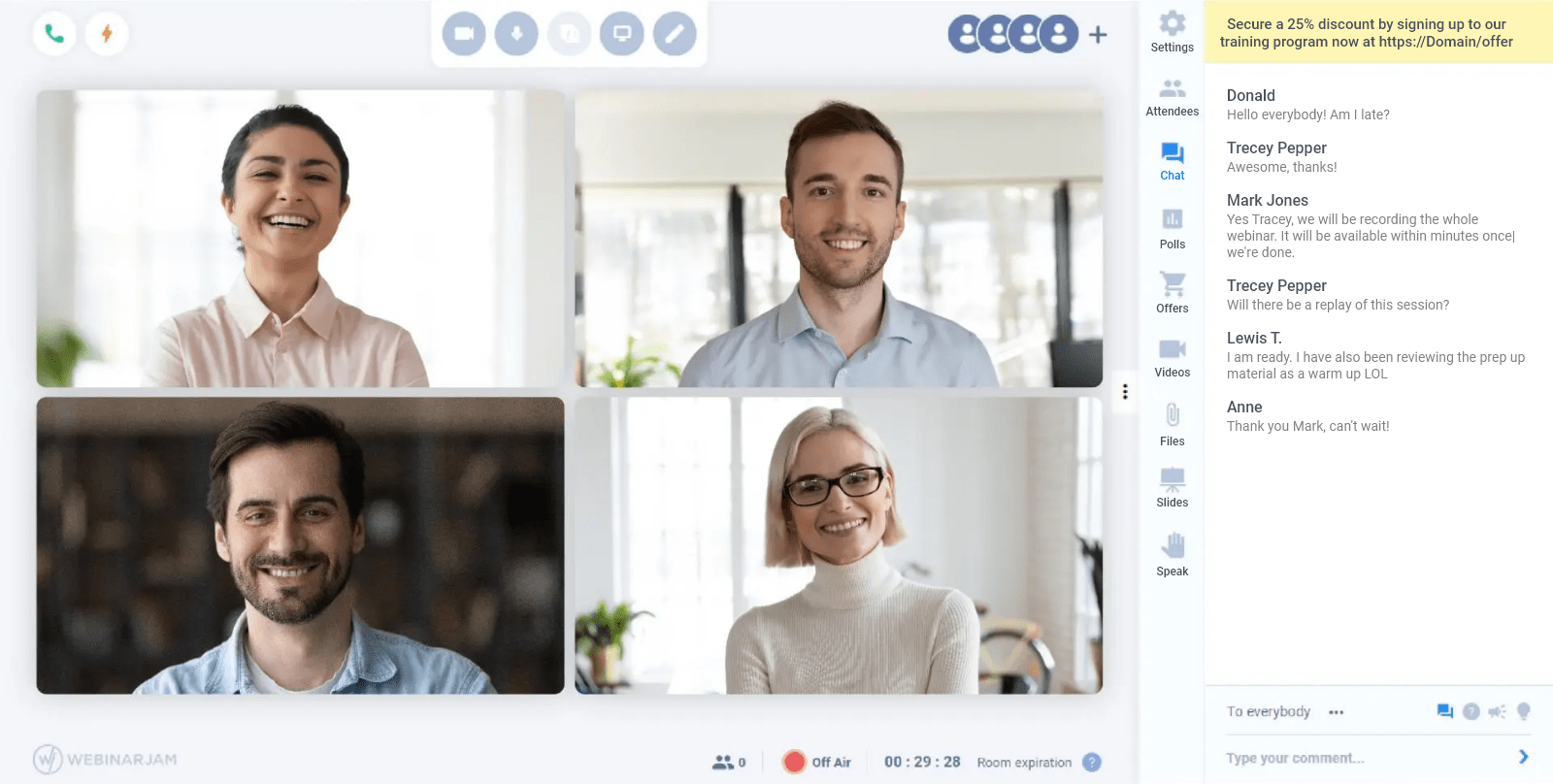
10. WebinarJam
Best for Sales and Marketing Webinars
WebinarJam is a wonderful tool for sales and marketing teams, with its suite of features designed to boost engagement and conversions. The platform’s ability to handle live offers, countdown timers, and instant replays enhances the sales process, offering a dynamic alternative to Zoom for sales-focused webinars.
It has a user-friendly interface combined with powerful integration capabilities, which simplifies the setup and execution of sales webinars, making it a preferred choice for marketers looking to maximize their reach and impact.
The platform’s emphasis on sales and marketing efficiency positions it as a key tool for professionals aiming to drive webinar success.
Pros:
Offers dynamic presentation capabilities, including live chat and polls.
Easy integration with popular email marketing platforms such as Mailchimp for efficient follow-up.
Features like the panic button to quickly resolve technical issues during a live session.
Supports large audiences with stable streaming quality.
Extensive and detailed analytics to gauge the success of marketing efforts.
Cons:
Limit of 5,000 attendees per webinar, which may not be enough for some large-scale events.
Faces some delays in the live broadcast sometimes.
Price: Starts at $39/month/host for 100 attendees.
How I Chose These Zoom Webinar Alternatives
I didn’t pick these tools based on hype or feature checklists alone. I shortlisted Zoom webinar alternatives that consistently support real webinar outcomes for educators, trainers, and marketers: smoother registration and attendance flow, stronger engagement during the session, and clearer reporting after it ends.
Here’s the framework I used to keep the list fair and practical.
1. Real User Reviews And Ratings
I started with feedback from real users on reputable review platforms to understand what people love, what breaks in real workflows, and what common complaints keep showing up. This helped me avoid tools that look great on paper but frustrate hosts once they go live.
2. Essential Webinar Features And Core Functionality
Next, I checked whether each platform covers the webinar basics without heavy workarounds: registration pages, reminders, live engagement (chat, polls, Q&A), replays, integrations, and attendee management. Tools that specialize in webinars generally performed better here than “meeting-first” solutions.
3. Ease Of Use For Hosts And Attendees
A webinar platform is only as good as how quickly you can set it up and run it under pressure. I weighed interface clarity, setup time, and how easy it is for attendees to join without tech headaches, especially for training sessions and marketing webinars with mixed audiences.
4. Customer Support And Reliability Under Load
Support matters most when something goes wrong 10 minutes before you go live. I considered responsiveness, available support channels, and reliability signals like stability for larger audiences, because webinar hosts need fewer surprises and faster fixes.
5. Value For Money Based On Real Webinar Needs
Instead of looking at price alone, I compared what you actually get for the cost: attendee limits, automation, replays, registration tooling, and analytics. Some platforms appear affordable upfront, but become expensive when you add essential webinar features.
6. Personal Experience And Credible Expert Perspectives
Finally, I leaned on what I’ve seen in real training and webinar workflows and cross-checked it with credible industry perspectives and benchmarks. This kept the recommendations grounded in outcomes, not just marketing claims, and helped explain why certain tools are better for specific use cases.
Zoom Meetings vs Zoom Webinars vs Zoom Events: Which One Are You Actually Replacing?
Before you choose an alternative, it helps to be clear on which Zoom product you’re comparing against, because they solve slightly different problems.
Zoom Meetings is best when you need a simple live call with discussion, screen share, and collaboration for smaller groups.
Zoom Webinars is built for one-to-many presentations where attendees mostly watch, and you manage Q&A and audience controls.
Zoom Events is more suitable for multi-session experiences that feel like an online conference, with registration, multiple sessions, and event-style workflows.
If your goal is training, lead generation, or repeatable marketing webinars, you’ll usually get the best results from webinar-first platforms in the list below.
My Top 3 Zoom Webinar Alternatives
If you are short on time, then let’s quickly check out some of the best Zoom webinar alternatives that can offer you great outcomes:
1. WebinarNinja
WebinarNinja is a comprehensive platform ideal for coaches, teachers, and consultants. With its engaging features like live polls and Q&A sessions, seamless payment integration, and professional landing page builder, it offers high-quality video tutorials and a tailored learning environment, making it a strong Zoom alternative.
2. ClickMeeting
ClickMeeting stands out as a top choice for online education with its user-friendly interface and specialized tools. Its interactive whiteboards, customizable tests, and detailed analytics enhance learning dynamics. It offers easy access for participants and ensures a seamless online learning journey.
3. BigMarker
BigMarker is my go-to for interactive webinars. Its engagement tools, like live polls and breakout rooms, foster collaboration. Ideal for workshops needing active participation, it integrates with Google Drive and Slack for enhanced productivity. It’s a great alternative to Zoom.
Webinar Software vs Virtual Event Platforms: What’s The Difference?
Webinars and virtual events can be different in some aspects. While some tools in the above list are webinar-first, others are event-first. Picking the right category saves you a lot of frustration.
If you’re mainly hosting single-session training or marketing webinars, webinar-first platforms usually feel simpler and convert better. If you’re running a conference-style experience, event platforms can be a better fit.
Why People Replace Zoom Webinars in 2026
Most people don’t switch because Zoom “doesn’t work.” They switch because they need webinar-specific outcomes: higher attendance, better engagement, smoother follow-ups, and clearer reporting. Here are the most common replacement triggers in 2026 and the capabilities that solve them.
Fix Webinars That Still Feel Like Meetings
Problem: The session runs, but it feels like a basic video call, so engagement stays passive. Solution: Choose webinar-first tools with strong attendee controls, moderated Q&A, and structured engagement features like polls and CTAs.
Improve Registration And Reminders To Lift Attendance
Problem: Registrations happen, but show-up rates underperform because the pre-webinar flow is weak. Solution: Look for built-in landing pages, better registration forms, calendar prompts, and automated reminder sequences.
Reduce Mid-Webinar Drop-Off With Better Interaction
Problem: People join, then leave around the midpoint because there’s no interaction rhythm. Solution: Prioritize platforms with scheduled polls, timed offers/CTAs, handouts, and breakout rooms for workshop-style sessions.
Get Analytics That Prove ROI And Learning Outcomes
Problem: You can see who attended, but you can’t see what worked or what drove results. Solution: Pick tools with engagement analytics, drop-off tracking, replay analytics, and CRM or marketing automation integrations.
Scale With Automated Or Evergreen Webinars
Problem: Live webinars work, but repeating the same delivery drains your time and team. Solution: Choose platforms that support automated/evergreen webinars, controlled replays, and behavior-based follow-ups.
Strengthen Security And Admin Control For Larger Teams
Problem: For enterprise or regulated teams, governance matters as much as video quality. Solution: Look for role-based permissions, SSO options, recording governance, and scalable performance for large audiences.
Avoid Pricing Surprises As You Grow
Problem: Costs can spike when attendance grows or “essential” webinar features sit behind upgrades. Solution: Compare pricing based on your real model (frequency, attendees, automation) and ensure basics like replays and registration are included.
Ready to Pick the Best Zoom Webinar Alternatives?
After a detailed review of the features and pricing of Zoom webinar alternatives, which tool appears to be the best for you?
If you ask me, I will pick WebinarNinja because it is a comprehensive solution for coaches, teachers, trainers & consultants. You can create live and hybrid webinars according to your needs and even create your live courses & training in just a few minutes.
The best alternative depends on your outcome: training, lead gen, workshops, or virtual events. If you need an all-in-one webinar workflow with registrations, reminders, engagement tools, and replays in one place, webinar-first platforms typically win. For many creators and trainers, WebinarNinja is often a practical fit.
Yes, if your goal is webinars rather than meetings. Webinar-first platforms like WebinarNinja usually give you stronger registration pages, automated reminders, better attendee engagement tools (polls, Q&A, CTAs), and clearer reporting. Zoom can be solid for delivery, but many teams switch for better conversion and follow-up workflows.
Choose Zoom when you prioritize familiar webinar delivery and broad attendee access. Choose Teams when your audience is largely internal or you need Microsoft-native workflows (authentication, calendar, org controls). If you want marketing-style webinars with landing pages, reminders, and funnel analytics, webinar-first platforms like WebinarNinja tend to outperform both.
Yes. Webinars continue to work because they combine education, trust-building, and scalable audience reach. They are especially effective when paired with strong registration flows, reminder sequences, and replays. Many organizations now treat webinars as an engine for content repurposing, lead nurturing, and customer education.
A common benchmark is that about 35% to 45% of registrants attend live, though it varies by audience, topic, and reminder quality. The biggest improvement lever is often the registration and reminder system, plus offering a replay for people who cannot attend live.
Many webinar tools offer a free trial or limited free tier, but “free” often comes with caps on attendees, duration, branding, or automation. If you’re testing alternatives, start with a free trial to evaluate video stability, registration flow, reminders, and reporting. WebinarNinja, for example, offers a free trial.
Want to host a webinar for free?
Use WebinarNinja to teach, improve marketing, and grow your sales.
WebinarNinja Editorial Team is a passionate group of experts dedicated to improving your webinar experiences with top-notch content. We stay ahead of the curve on trends, tackle technical hurdles, and provide practical tips to boost your business. With our commitment to quality and integrity, you can be confident you're getting the most reliable resources to enhance your webinars.