
Money is personal. People don’t hand their savings, their retirement plans, or their insurance decisions to just anyone. They hand them to someone they trust. That’s exactly why financial services webinars have quietly become one of the most effective tools financial advisors, wealth managers, insurance agents, and fintech founders use to win new clients and keep the ones they already have.
If you’ve ever tried to explain a Roth conversion or a market downturn over email, you already know why. Some topics need a face, a voice, and room for questions. Webinars for financial services give you exactly that, without asking prospects to drive to your office or sit through a sales pitch disguised as a seminar.
In this guide, we’ll walk through why webinars work so well for financial services teams, the formats that fit different goals, the features you actually need, and how to pick a platform that won’t slow you down.
Why Financial Services Webinars Work So Well
A few reasons financial services webinars consistently outperform other formats for advisors and firms:
- They build credibility fast. Watching you teach is more convincing than reading a blog post about your expertise.
- They scale one-to-many conversations. Instead of repeating the same retirement-planning talk to twenty individual prospects, you say it once to twenty people at the same time.
- They’re compliance-friendly when recorded properly. A recorded, structured session is easier to document than a string of informal calls.
- They generate warm leads, not cold ones. Anyone who registers for a webinar on estate planning or tax-loss harvesting has already told you what they care about.
This is also why financial services ranks among the most active industries running webinars for lead generation and client education, right alongside consulting and SaaS.
Here’s a quick video to help you understand exactly what webinar marketing for financial webinars is:
Case Study:
Martin Bamford, a financial planner with two decades of industry experience, built an entire marketing agency around this idea. After shifting his focus from consumer clients to other financial planners, he started hosting a monthly webinar to establish his agency as a trusted voice in financial services marketing.
The result was a steady, sometimes overwhelming, stream of new inquiries, driven almost entirely by consistent, educational webinars rather than traditional advertising.

Who Should Be Running Webinars for Financial Services
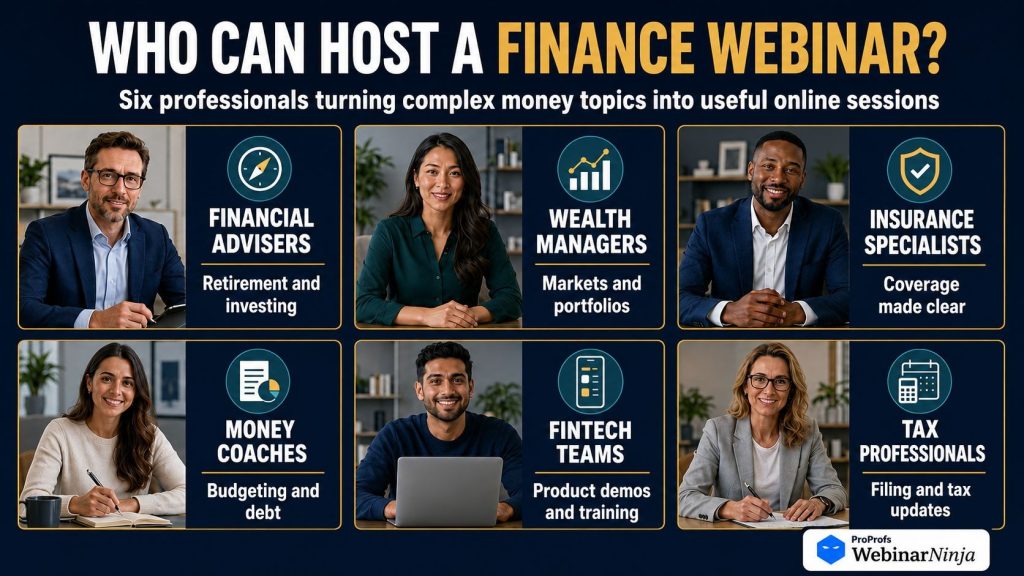
Financial services webinars aren’t just for large institutions with compliance departments and marketing teams. In practice, the people getting the most value from them are:
- Independent financial advisors explaining retirement, tax, or investment strategy to prospects and existing clients
- Wealth management firms hosting quarterly market updates or portfolio reviews for their client base
- Insurance agents and agencies walking people through Medicare, life insurance, or annuity options
- Financial coaches teaching budgeting, debt payoff, or first-time investing to a general audience
- Fintech companies onboarding users or demoing a new app, tool, or feature
- CPAs and tax professionals running seasonal webinars around filing deadlines or new tax law changes
Notice what these all have in common: the person on the other end is making a decision that involves risk, money, and trust. That’s the exact situation where a live, human explanation beats a static page or a PDF every time.
Want to host a webinar for free?
Use WebinarNinja to generate leads, improve marketing, and grow your sales.
Formats That Work Best for Financial Topics
Not every financial topic needs the same webinar format. Here’s how the formats map to common use cases:
- Live webinars work best for timely topics: quarterly market commentary, reactions to a Fed rate decision, or open enrollment season for insurance. The live Q&A matters here because people have specific, personal questions they want answered in the moment.
- Automated (evergreen) webinars are ideal for repeatable education, like a “getting started with investing” session or an explainer on your firm’s onboarding process. Set it up once, and it keeps generating leads and educating prospects on autopilot, day or night.
- Series webinars suit multi-part topics such as a four-week retirement-readiness course or a financial literacy program for younger clients. One registration gets attendees the whole series, which keeps them engaged over time.
- Hybrid webinars let you pre-record the core content (so it’s accurate and compliance-reviewed) while a live host handles chat and questions in real time, a nice middle ground for regulated topics.
Webinar Topics That Consistently Perform Well
If you’re planning your first (or fiftieth) financial services webinar, these topics tend to draw strong registration and attendance:
1. Retirement Planning and Social Security Timing
- “The Social Security Decision You Only Get to Make Once”
- “Claim at 62, 67, or 70? What the Numbers Actually Say”
- “Retirement Income 101: Making Your Money Outlast You”
- “The $100,000 Social Security Mistake Most People Make”
- “When Should You Really Retire? A Timing Masterclass”
2. Tax Strategies Before Year-End
- “Last Chance: Year-End Tax Moves You Can’t Make in January”
- “The December Tax Checklist Your Accountant Wishes You’d Read”
- “Tax-Loss Harvesting Made Simple: A Year-End Playbook”
- “How to Legally Shrink Your Tax Bill Before December 31”
- “Year-End Tax Strategy: What the Wealthy Do Differently”
3. Market Outlook and Portfolio Positioning
- “What’s Next for the Markets? Our Quarterly Outlook”
- “Positioning Your Portfolio for Whatever Happens Next”
- “Bulls, Bears, and Everything In Between: A Market Briefing”
- “Rebalancing Season: Is Your Portfolio Still Working for You?”
- “Reading the Signals: What Smart Investors Are Watching Now”
4. Estate Planning Basics
- “Estate Planning 101: Protecting What You’ve Built”
- “Wills, Trusts, and Everything You’ve Been Putting Off”
- “Who Gets What? A No-Nonsense Guide to Estate Planning”
- “The Estate Plan Mistake That Costs Families the Most”
- “Don’t Leave It to Chance: Planning for the Next Generation”
5. First-Time Homebuyer Financing
- “First Home, First Loan: A Beginner’s Guide to Financing”
- “How Much House Can You Actually Afford?”
- “Down Payments, Rates, and Pre-Approval: Demystified”
- “From Renter to Homeowner: Your Financing Roadmap”
- “The First-Time Buyer’s Guide to Not Overpaying”
6. Insurance and Medicare Open Enrollment
- “Medicare Made Simple: What to Know Before You Enroll”
- “Open Enrollment Countdown: Are You in the Right Plan?”
- “Medicare Advantage vs. Original Medicare: Which Wins for You?”
- “The Open Enrollment Mistakes That Cost You All Year”
- “Turning 65? Here’s Your Medicare Survival Guide”
7. Small Business Retirement Plans (SEP IRA, Solo 401k)
- “Retirement Plans for the Self-Employed: SEP IRA vs. Solo 401k”
- “Pay Yourself First: Retirement Savings for Business Owners”
- “The Tax-Smart Way Entrepreneurs Save for Retirement”
- “Solo 401k or SEP IRA? Choosing the Right Fit for Your Business”
- “Small Business, Big Savings: A Retirement Plan Primer”
8. Financial Wellness for Employees (Corporate Training Angle)
- “Financial Wellness at Work: A Benefit Employees Actually Use”
- “Money Stress Is Costing You Productivity. Here’s the Fix”
- “Building a Financially Confident Workforce”
- “Financial Wellness 101: A Workshop for Your Team”
- “From Paycheck to Plan: Helping Employees Build Real Wealth”
Each of these works as a lead magnet because the person registering has already self-identified their need, which makes your follow-up conversation far easier.
Now, here’s a quick video on how to choose a great webinar topic:
What to Look for in a Webinar Platform for Financial Services
Not every webinar tool was built with regulated industries in mind. Before you commit to one, make sure it covers the basics that financial services teams tend to need:
- Built-in landing and registration pages, so you’re not stitching together three separate tools just to capture a lead
- Automated email reminders and follow-ups, since financial webinars often have longer sales cycles that depend on nurturing
- Instant, reliable recordings, useful for both compliance records and evergreen replay funnels
- The ability to hide attendee counts, which matters if you’re running a smaller, boutique session and don’t want a low headcount to undercut credibility
- No downloads required for attendees, because the last thing you want is a 65-year-old prospect abandoning your retirement webinar over a software install
- CRM and email integrations, so leads flow straight into your existing pipeline instead of sitting in a spreadsheet
This is where a platform like WebinarNinja fits naturally into a financial services workflow. It’s built to be delightfully easy, with landing pages, automated email sequences, and analytics included out of the box, so advisors and firms can focus on content rather than the tech setup.
Attendees join from any browser (no app to download), you can hide attendee counts for smaller sessions, and recordings are ready to share within seconds of your webinar ending.
For a firm running a retirement webinar every quarter or a fintech demoing a product weekly, WebinarNinja’s automated webinar option turns a single well-made session into an ongoing lead source.
Want to host a webinar for free?
Use WebinarNinja to generate leads, improve marketing, and grow your sales.
A Simple Way to Get Started
If you’re new to webinars for financial services, don’t overthink your first one. Start with a single, focused topic your audience already asks about, like “What Changes to Expect in Retirement Accounts This Year.” Keep it to 30-45 minutes, leave 10 minutes for live questions, and follow up with attendees (and no-shows) within 24 hours while the topic is still fresh in their minds.
Once that first webinar performs well, turn it into an automated, evergreen session so it keeps working for you long after the live date has passed. That’s the real advantage of financial services webinars: one good session, repurposed correctly, can generate leads for months.
Ready to Run Your Next Financial Services Webinar?
Whether you’re an independent advisor hosting your first client webinar, an insurance agency running Medicare enrollment sessions, or a fintech team holding weekly product demos, the platform behind the scenes matters more than most people realize. A clunky sign-up process, a confusing join link, or a recording that takes hours to appear can quietly cost you the leads you worked hard to earn.
The right platform, on the other hand, makes the difference between a smooth, professional session and a stressful one where you’re troubleshooting tech instead of building trust with your audience.
WebinarNinja gives financial services professionals the landing pages, automated reminders, and reliable recordings they need, all in one place, without the technical headaches of stitching together separate tools. Attendees join from any browser with no download required, your follow-up emails go out automatically, and your replay is ready within seconds of ending, so your team can focus on the conversation, not the setup.
Frequently Asked Questions
What is a financial services webinar?
A financial services webinar is an online session where an advisor, firm, or fintech company teaches or presents on a money-related topic, such as retirement planning, tax strategy, or investing, usually followed by a live Q&A. It's used both to educate existing clients and to generate new leads.
Are financial webinars actually effective for generating leads?
Yes. Since attendees choose to register for a specific topic (like estate planning or Medicare enrollment), they arrive already interested and pre-qualified. This makes follow-up conversations easier compared to cold outreach.
How long should a financial services webinar be?
Most run between 30 and 45 minutes, with the last 10 to 15 minutes reserved for live questions. Financial topics can get dense quickly, so shorter, focused sessions tend to hold attention better than long ones.
Do financial webinars need to be compliant with regulations?
Yes, in most cases. Advisors and firms should have recordings and materials reviewed according to their compliance department's or regulator's guidelines (such as FINRA or SEC rules in the US) before hosting or distributing them. It's worth checking with a compliance officer or legal advisor before publishing anything publicly.
Should the webinar be live or pre-recorded (automated)?
Both have a place. Live works well for timely topics like market updates, since attendees can ask real-time questions. Automated (evergreen) webinars suit repeatable education, like "getting started with investing," and keep generating leads without ongoing effort.
What topics work best for financial services webinars?
Topics tied to a specific life event or deadline tend to perform best: retirement timing, year-end tax planning, Medicare open enrollment, and estate planning are consistently popular because they map to a real decision the attendee is facing.
How do I get people to actually register for a financial webinar?
Promote it through email, LinkedIn, and your website with a clear, benefit-driven title (not just "Webinar on Retirement"). A dedicated landing page with a short registration form and a reminder email sequence significantly improves show-up rates.
What's a good attendance rate for a financial webinar?
Attendance rates for financial and B2B webinars generally range from 35 to 50 percent of registrants. If you're below that, the send-time, reminder cadence, or topic relevance are usually the first things worth checking.
Do attendees need to download software to join?
It depends on the platform. Many modern tools, including WebinarNinja, let attendees join directly from a browser link with no download required, which reduces drop-off, especially for older or less tech-savvy audiences.
How do I keep a small webinar from looking unimpressive?
Choose a platform that lets you hide the attendee count. A smaller, boutique session (say, 8 to 15 people) can still feel credible and valuable if attendees can't see exactly how many others are on the call.
What should I do after the webinar ends?
Send a follow-up email within 24 hours to both attendees and no-shows, including the recording, a summary of key takeaways, and a clear next step (a call, consultation, or resource download). Follow-up is often where the actual conversions happen, not during the webinar itself.
Can one webinar be reused for ongoing lead generation?
Yes. A well-performing live webinar can be converted into an automated, evergreen session that runs on a recurring schedule or on demand. This turns a single hour of effort into a lead source that keeps working for months.
What features should I look for in a webinar platform for financial services?
Look for built-in landing pages, automated email reminders, reliable recordings available shortly after the session, CRM integration, and the ability to hide attendee counts, since these directly affect both lead capture and how professional the session feels.
Want to host a webinar for free?
Use WebinarNinja to teach, improve marketing, and grow your sales.