
Your prospective clients are not waiting for a referral. They are on Google at 11 pm, typing “what happens if I ignore my non-compete” or “how do courts divide assets in a divorce.” They are looking for an attorney they can trust before they ever pick up the phone.
The firms capturing those clients are not spending more on billboards. They are showing up as the expert in the room through webinars built around exactly those questions.
Few law firms use seminars or webinars as a core marketing channel, and that is precisely the opportunity. A well-executed 60-minute webinar lets a prospective client hear you think, watch you answer hard questions in real time, and assess your communication style before committing to a consultation. No ad format in legal marketing replicates that sequence.
This guide walks you through the complete playbook: which format to run, how to pick topics that fill your calendar, and how to turn every recording into an asset that generates leads while you are at the courthouse.
Why Do Webinars Work So Well for Law Firms?
Trust is the product law firms actually sell. Prospective clients choose an attorney based on perceived competence and comfort, and most traditional marketing channels deliver neither at any meaningful depth. A 30-second ad or a keyword-targeted landing page tells a prospect you exist. A 60-minute webinar tells them who you are.
According to research by TwentyThree, 73% of B2B marketers say webinars are their top source of high-quality leads. For legal services, where a single retained client can represent thousands of dollars in fees, lead quality matters far more than raw volume.

The practical results attorneys report back on this. Ed Hones, owner and managing attorney at Hones Law Employment Lawyers PLLC, noted that a webinar on employee rights attracted over 200 participants, with approximately 15% scheduling consultations afterward.
Andrew Pickett, a personal injury attorney, reported that a single session on “Understanding Your Rights After an Accident” generated approximately 15 new consultation leads directly from one event. These are not outliers for firms that pick the right topic and show up prepared. They are typical.
Beyond lead generation, webinars reduce one of the most underestimated costs in legal practice: the time attorneys spend on repetitive intake conversations. One well-produced session handles 50 prospective clients simultaneously, pre-qualifying them before they ever book a call.
Before we move forward, check out this quick video on the benefits of webinars:
What Types of Webinars Should Law Firms Run?
Picking the wrong format wastes your preparation time before the first attendee joins. The four formats available to law firms serve different goals, and the right starting point depends on what outcome you are optimizing for.
| Webinar Format | Best For | Lead Generation Strength |
| Live Webinar | Filling the consultation calendar fast | Highest: accounts for 91.3% of webinar-generated leads |
| Automated Webinar | 24/7 evergreen lead capture | High: extends total views up to 80% over live-only |
| Series Webinar | Complex practice areas needing multiple sessions | Medium-high: builds relationship over weeks |
| Hybrid Webinar | Polished delivery with real-time Q&A | High: combines production quality with live trust signals |
Which Format Should You Start With?
Start with a live webinar. The live format generates the highest conversion rates, gives you unfiltered audience feedback on your topic selection, and produces the recording you need to build your automated version afterward.
Once you have run one live session successfully, convert it into an automated webinar running on a set schedule. That recording becomes a lead generation asset operating independently of your calendar.
Want to host a webinar for free?
Use WebinarNinja to generate leads, improve marketing, and grow your sales.
How Do You Choose a Topic That Attracts Clients?
This is where most law firm webinar programs fail from the start. Attorneys tend to pick topics based on what they find legally interesting, such as recent appellate decisions or nuanced regulatory changes, rather than what their ideal client is actively worried about.
Your webinar topic must answer the question your target client types into Google when they cannot sleep. That is the test. If a layperson were to search it at 11 pm, it is a viable topic. If it requires legal training to understand why it matters, it is not.
What Topics Work by Practice Area?
| Practice Area | High-Performing Topics |
| Personal Injury | “What to Do in the First 48 Hours After an Accident”; “How Insurance Companies Calculate Settlements” |
| Estate Planning | “How to Protect Your Assets If You Need Long-Term Care”; “Why a Will Is Not Enough” |
| Employment Law | “Your Rights When You’re Laid Off”; “When Is a Non-Compete Enforceable?” |
| Business Law | “Legal Mistakes Founders Make in Year One”; “What to Do When a Client Refuses to Pay” |
| Family Law | “Protecting Your Finances Before and During Divorce”; “How Courts Decide Custody” |
| Immigration | “Green Card Options for Entrepreneurs”; “What a Visa Denial Means and What to Do Next” |
Each of these topics speaks to a moment of anxiety a prospective client is experiencing right now. That emotional specificity is what fills registration pages.
A secondary angle worth building toward: CLE-eligible content for attorneys in your referral network. For practice areas where attorney referrals drive a meaningful share of intake, hosting CLE-qualified webinars builds those relationships at scale. BARBRI notes that live webinars are typically eligible for 1.5 general CLE credits, depending on program length and state rules.
How to Run a Lead-Generating Webinar for Your Law Firm
Here’s a step-by-step guide to create and host a high-performing webinar using an all-in-one, AI webinar platform, WebinarNinja
Step 1: Create and Configure Your Webinar
Log into WebinarNinja, click “Create New Webinar,” and select your format. Give your webinar a specific, outcome-driven title, set the date and time, assign any co-hosts, and choose free registration.
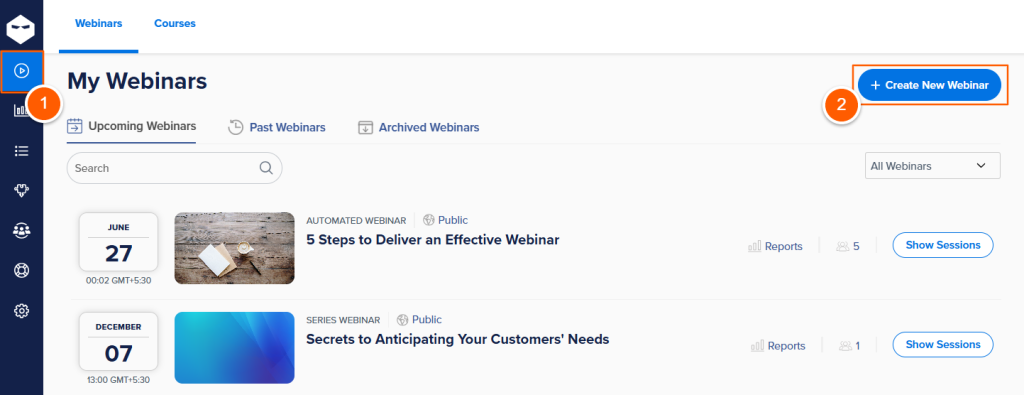
That last setting matters: free webinars generate significantly more registrations and are the correct format for client-facing lead generation. Save and move to the next step.
Step 2: Build Your Registration Page
WebinarNinja generates a branded registration page automatically; no designer or separate landing page tool is required.
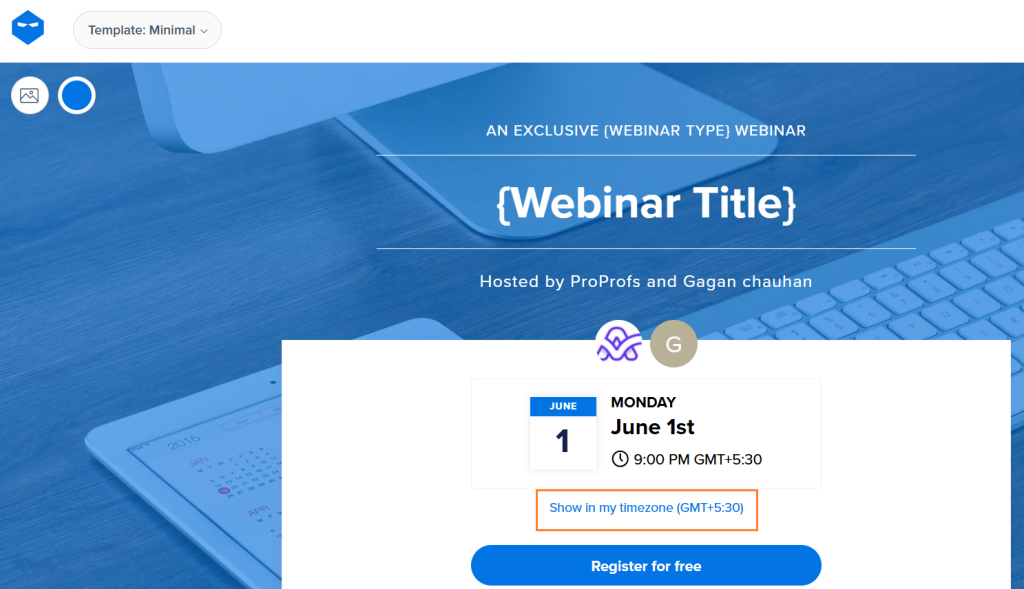
Sharpen the headline to describe a specific outcome rather than a general topic, and add one qualifying question (“What is your most pressing concern about this?”) to segment your follow-up without reducing sign-ups.
Step 3: Set Up Automated Email Sequences
Configure your pre-event reminder sequence before the webinar goes live: confirmation upon registration, a reminder 1 week out, 1 day out, and 1 hour out.
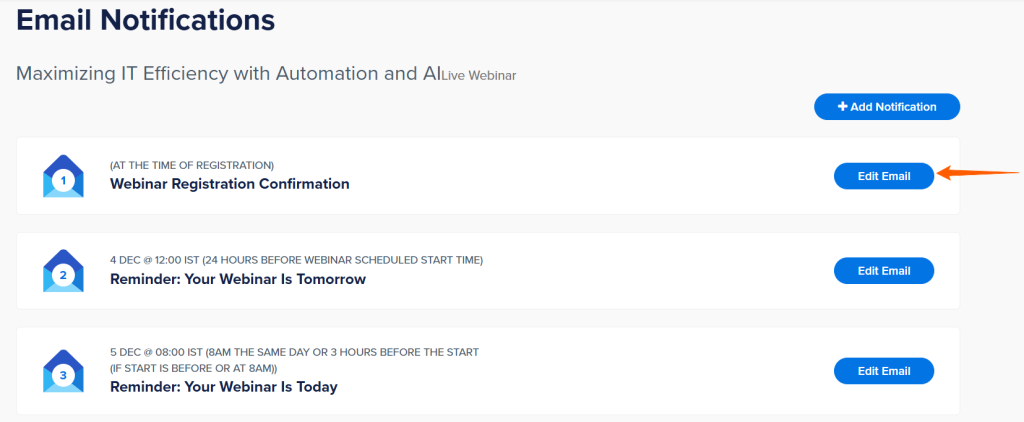
Strong webinar reminder sequences lift show-up rates from 40% to 58%. WebinarNinja handles all of this automatically once it is set up.
Step 4: Structure the Session for Trust and Conversion
Spend the first five minutes on a brief intro and agenda. Run 40 minutes of substantive, scenario-based content. Open the floor for a live Q&A with 10 minutes remaining. Close with a single, clear call-to-action: a free consultation with a booking link dropped in chat.
According to research by TwentyThree, live webinars account for 91.3% of all webinar-generated leads precisely because that real-time interaction drives immediate decision-making. Do not open with firm history or awards. Deliver the content first, and let your competence make the case.
Step 5: Go Live and Engage
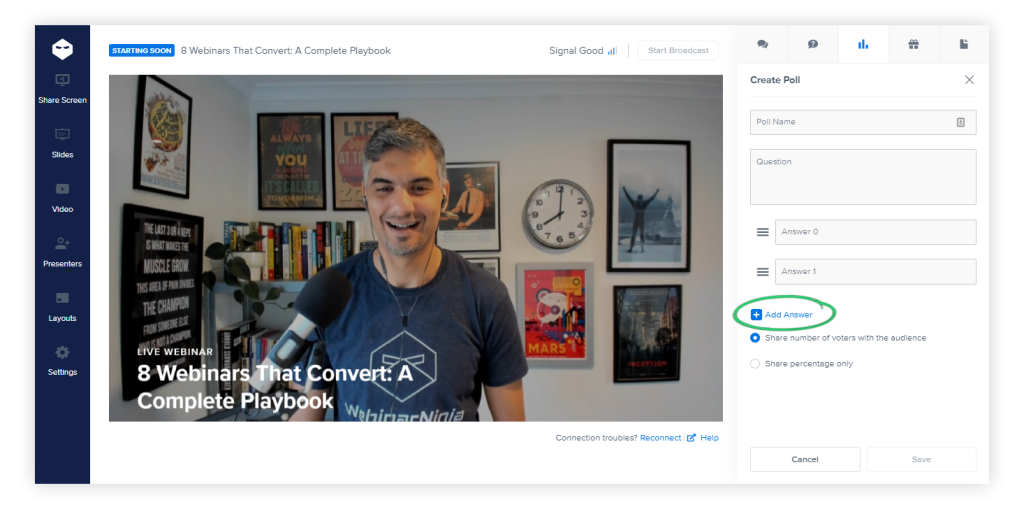
Run a test session before going live to verify audio, video, and slides. In the WebinarNinja Studio, activate chat, Q&A, and at least one poll during the session.
Asking “How soon do you expect to need legal help with this matter?” segments your audience in real time, letting you prioritize high-intent leads in your follow-up without any manual sorting.
Step 6: Follow Up Within Two Hours
The session ending is where most law firm webinar programs lose their leads. Firms with structured follow-up systems generate 2.5 times as many conversions as those without one.
Use the engagement data in your WebinarNinja analytics to segment three groups:
- High-intent attendees (asked questions, clicked the CTA, stayed to the end): Personal email within two hours referencing their specific question, with a direct consultation booking link.
- Warm attendees (attended but did not engage): Send the recording with a brief recap and a soft CTA.
- No-shows (registered but did not attend): Deliver the recording immediately, follow up three days later with a related resource. These are still qualified leads who raised their hand.
According to WebinarCare data, 25% of webinar-related sales happen after the event through email follow-ups, which means your post-event sequence is generating revenue that your live CTA alone never would.
Want to host a webinar for free?
Use WebinarNinja to generate leads, improve marketing, and grow your sales.
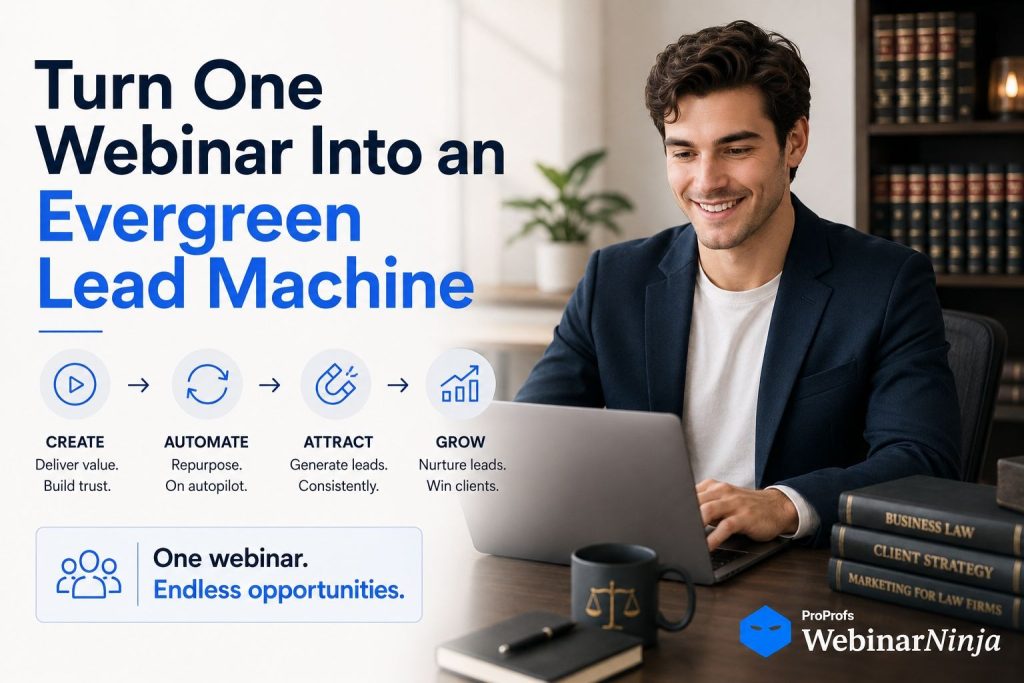
How Do You Turn One Webinar Into an Evergreen Lead Machine?
The largest return on a law firm webinar comes not from the live session itself, but from the asset it becomes afterward. A well-produced 60-minute recording has a working lifespan measured in years.
Once you have a recording, WebinarNinja’s automated webinar functionality lets you schedule it to run on repeat, Tuesday and Thursday at noon, for example, so new registrants join what feels like a live session. This preserves the urgency of a live event while requiring zero attorney time per additional showing.
Simultaneously, gate the recording on your website behind a simple form. Visitors who find your firm through organic search or referral can access it in exchange for their name and email, creating a passive lead capture mechanism that operates without your involvement. Extending the total reach of a webinar by making recordings available on demand by default can increase total views by up to 80%. That is 80% more prospective clients experiencing your expertise from a single session.
A further use: send every new inquiry to the recording before their consultation. Prospects who arrive at a consultation having already watched your webinar come better informed, ask more specific questions, and convert at meaningfully higher rates than cold inquiries.
Here’s a quick video that will offer you a better idea of this:
What Ethical Guardrails Apply to Law Firm Webinars?
Attorney advertising rules apply to webinar promotion and content. The specifics vary by state bar, but the universal principles are consistent and entirely manageable.
Accuracy in Promotional Materials:
Webinar promotion cannot make false claims about outcomes, cannot guarantee results, and cannot use testimonials in jurisdictions where they are prohibited. A headline like “How Our Clients Recovered Maximum Compensation” may violate advertising rules in your state. “What to Know Before Filing a Personal Injury Claim” does not.
No Attorney-Client Relationship:
State explicitly, verbally, and in writing, that the webinar does not create an attorney-client relationship and does not constitute legal advice for any individual attendee’s situation. Frame answers to questions as general information rather than advice specific to a questioner’s circumstances.
Jurisdiction:
If your webinar reaches attendees in states where you are not licensed, unauthorized practice of law considerations apply. Consult your bar association’s ethics hotline on appropriate disclosure language if you are promoting outside your licensed jurisdictions.
These are not obstacles to running webinars. They require one paragraph of standard disclaimer language and one verbal disclosure at the start of each session.
Want to host a webinar for free?
Use WebinarNinja to generate leads, improve marketing, and grow your sales.
Build Your Webinar Program Before Your Competitors Do
The law firms generating a predictable stream of consultation bookings have built owned lead generation assets that compound over time. Each recorded webinar becomes an evergreen funnel. The attendees list their email database. Each Q&A session reveals exactly what their next session should cover.
Your first webinar does not need to be perfect. It needs to be specific, honest, and backed by a follow-up system that captures and nurtures the leads it generates. Start with one topic, one live session, and one automated follow-up sequence. Measure what works. Build from there.
WebinarNinja gives law firms the complete infrastructure to run this program: built-in registration pages, automated email sequences, live and evergreen webinar capabilities, and analytics that show you exactly who is ready to book. Trusted by 30,000+ businesses, including legal services providers, it delivers everything in one platform with no technical setup required. Get started free and run your first session before the end of the month.
Frequently Asked Questions
What topics work best for law firm webinars?
Topics framed around specific client anxieties outperform topics framed around legal doctrine every time. A webinar on "What Happens to Your Business in a Divorce" consistently outperforms "An Overview of Equitable Distribution Law" because one addresses a fear that the prospect is already experiencing. The test is simple: would someone search this question at 11 pm without a law degree? If yes, it belongs on your content calendar. For a full breakdown of webinar strategy, the approach is the same across industries: the best topics sell a result, not a subject.
How long should a law firm webinar be?
60 minutes is the most effective length for client-facing law firm webinars. This allows roughly 40 minutes of substantive content, 15 minutes of Q&A, and five minutes for your call-to-action. According to webinar best practices , attendees are most focused during the first 30 minutes, and sessions longer than 75 minutes see a steep drop-off unless the audience self-selects for depth. CLE-focused sessions targeting attorney referral sources typically run 75 to 90 minutes to satisfy credit hour requirements.
How many attendees do you need for a successful law firm webinar?
A successful law firm webinar is defined by consultation bookings, not audience size. Research shows that webinars with 50 to 100 attendees see the highest CTA conversion rates, at around 26%, because smaller rooms feel more personal and create stronger social proof without anonymity. A session with 40 highly targeted attendees facing the exact legal issue you address will produce more retained clients than a 400-person general audience webinar every time.
What is a realistic conversion rate for law firm webinars?
Law firm webinars typically generate consultation bookings from 10–25% of live attendees. If your conversion rate is consistently below 10%, the most common causes are a mismatch between audience intent and the topic, a weak call-to-action, or no structured follow-up sequence after the session. Conversion rates above 25% are achievable when the topic addresses urgent legal situations and the CTA is presented clearly with genuine scarcity around attorney availability.
Should law firm webinars be free or paid?
Free webinars for prospective clients are the correct default for law firms using webinars as a lead generation tool. The purpose is to build trust and demonstrate competence at zero cost to the prospect, creating the conditions for a consultation booking. Paid webinars make sense for CLE-eligible programs targeting other legal professionals, or when the webinar is part of a formal course offering. Charging prospective clients for a webinar adds a barrier that reduces registration volume without meaningfully improving lead quality for most practice areas.
How do you handle questions that require specific legal advice?
Establish upfront that the session provides general legal education, not advice specific to any attendee's situation, and that attending does not create an attorney-client relationship. When an attendee asks a question that requires specific legal advice, acknowledge it directly: "That is an important question and the answer depends on facts specific to your situation. Let me walk through the general considerations here, and I would like to invite you to book a consultation where we can address your circumstances directly." This is both ethically sound and functions as the most natural consultation CTA available.
Can solo attorneys run effective webinar programs?
Solo attorneys and small firms often run more effective webinar programs than large firms, precisely because they focus narrowly on a specific practice area and speak with genuine personal authority. Large firms frequently produce generic webinar content serving too many audiences at once. A solo family law attorney in a specific metro area hosting monthly webinars on divorce-related financial issues will consistently outperform a 50-attorney firm hosting quarterly "legal updates" on broad topics.
What is the best time to host a law firm webinar?
According to research published by TwentyThree, Tuesday through Thursday consistently produces the highest attendance rates for professional service webinars. Mid-day sessions between 12pm and 2pm work best for business-focused practice areas like employment and business law, since attendees are already at their desks. For consumer-facing practice areas like personal injury, family law, or estate planning, evening sessions between 6:30pm and 8 pm often outperform lunch slots because prospective clients are researching on personal time, not during work hours.
How often should a law firm run webinars?
Monthly is the right cadence for firms committed to webinar-based lead generation. This frequency keeps your firm visible to your list, builds a compounding library of recorded sessions, and creates consistent enough presence that your audience begins to associate your firm with authoritative answers in your practice area. Quarterly is the minimum to maintain any momentum. Running a formal webinar lead generation strategy means treating webinars as infrastructure, not one-off experiments.
How do you promote a law firm webinar without a large email list?
LinkedIn organic content is the highest-ROI channel for law firm webinar promotion when your email list is small. Post the registration link with a concise explanation of the problem the webinar solves, tag relevant professional communities, and engage personally with every comment. Paid LinkedIn or Facebook promotion, targeted by profession, geography, and relevant life events (recently married, recently started a business), allows precise audience targeting at manageable cost.
What equipment do you need to run a professional law firm webinar?
A professional-grade session requires a quality USB microphone, adequate lighting, and a stable internet connection. A DSLR or mirrorless camera improves video quality beyond a built-in laptop webcam but is not required for a credible first session. Run a full test session through WebinarNinja's built-in test webinar feature before any live event to catch technical issues before they cost you leads.
How do you turn webinar no-shows into clients?
Registrants who do not attend are still qualified leads. They raised their hand and expressed interest in the topic. Send the recording within 24 hours with a message noting you noticed they could not make it. Follow up three days later with a specific resource related to the topic and a soft consultation CTA.
Want to host a webinar for free?
Use WebinarNinja to teach, improve marketing, and grow your sales.