
A marketing team running a product launch on YouTube, LinkedIn, and Facebook at the same time sounds like a real win. And for raw broadcast distribution, Restream delivers exactly that. Push one stream to 30+ platforms simultaneously, manage chat from a single dashboard, and clip highlights with AI after the session.
But a business running webinars is solving a different problem. Reach is only one part of it. Teams also need registration, lead capture, attendee data, CRM integration, and automated follow-up. Restream is built around channel reach and stream performance, not a unified webinar journey.
That gap is what this list addresses. Demand Gen Report’s research ranks webinars and live events among the three most effective B2B content formats. These 10 Restream alternatives focus on what business webinar programs actually need.
10 Best Restream Alternatives
Here is a quick look at how these Restream alternatives and competitors stack up before the full breakdown:
| Tool | Best For | Key Differentiator vs. Restream | Starting Price |
| ProProfs WebinarNinja | Generating leads, growing sales, and teaching better | AI-powered webinar tools: AI Sales Coach (pitch feedback), AI Engagement Lead (live chat FAQs), AI Editorial Lead (headlines), AI Content Strategist (post-event content), AI Funnel Builder (set up a webinar workflow) | $0.30/attendee/month |
| Demio | Behavior-based lead generation | Attendee engagement and marketing automation | ~$42-63/month |
| Livestorm | B2B teams with deep CRM stacks | CRM-connected workflows and attendee-credit pricing | ~$99/month |
| GoTo Webinar | Large-scale enterprise live sessions | Structured reporting and larger webinar operations | ~$59/user/month |
| Zoom Webinars | Teams already standardized on Zoom | Familiar registered webinar environment | ~$66-83/month add-on + license |
| eWebinar | Automated and evergreen campaigns | Always-on interactive automated webinars | $99/month |
| BigMarker | White-label live sessions and events | Deeper branding and customizable event experiences | ~$79/month |
| ON24 | Enterprise demand generation | First-party engagement and enterprise content programs | Custom ($25K+/yr) |
| Airmeet | Community and networking-driven events | Networking and broader event workflows | $167/month |
| StreamYard | Browser-based live streaming with production depth | Production-focused streaming and multistreaming | $49/month |
Now here is how each one actually holds up:
1. ProProfs WebinarNinja
Best for Generating Leads, Growing Sales, and Teaching Better
ProProfs WebinarNinja is built for teams that need a live session to do more than reach an audience. It brings live, automated, series, and hybrid webinars into one platform, along with registration pages, emails, engagement tools, recordings, replays, analytics, and integrations. That broader workflow is what makes it the leading option here when several Restream gaps need to be solved at once.
Restream is built to distribute a single live stream to multiple destinations. ProProfs WebinarNinja is built to turn that live session into a measurable webinar campaign. Every registration gives you an identified attendee. Every poll response, question, offer interaction, and attendance detail adds context to the analytics. Automated emails, recordings, replays, and integrations keep the workflow moving after the session closes.
The AI layer adds to that workflow rather than replacing it. AI Conversion Writer helps with registration-page messaging, while AI Sales Coach supports presenter preparation.
Pros:
- AI supports registration copy, presenter prep, live questions, and post-webinar content reuse.
- Supports live, automated, series, and hybrid webinars beyond one-off broadcasts.
- Built-in webinar registration pages and emails turn viewers into identifiable webinar leads.
- Automatic recordings and replays support on-demand webinars after the live session ends.
- Analytics help teams track attendance, engagement, and replay activity beyond view counts.
- Chat, Q&A, polls, offers, and handouts capture deeper webinar engagement.
- HubSpot, Mailchimp, Stripe, and 1,000+ Zapier integrations connect webinar activity to wider campaigns.
Cons:
- No downloadable or on-premise version.
- Dark user interface option is not available.
Pricing: A FREE 14-day trial is available. Paid starts at $0.30/attendee/month (includes CourseNinja, worth $ 1,200).
Case study:
Amanda Haddaway, Managing Director at HR Answerbox, uses ProProfs WebinarNinja to attract potential clients through webinars while reducing the need to host every session live. Its automated webinars let her keep lead generation running while she focuses on existing clients.

2. Demio
Best for Behavior-Based Lead Generation
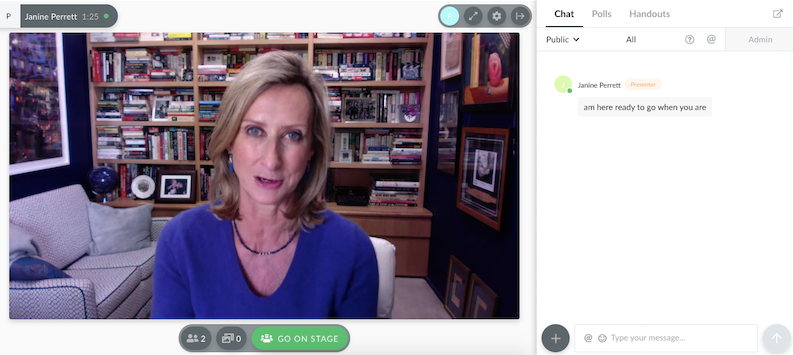
Restream tells you how the broadcast performed. Demio goes further into what individual webinar attendees did and how that information can shape what happens next.
An attendee can join via a browser, answer polls, interact with featured actions, and navigate a webinar experience designed for marketing follow-up. That behavioral layer is what separates Demio from Restream for teams running demand-generation webinars where the goal is a segmented, actionable lead list rather than just a successful stream.
Demio becomes especially relevant when behavioral segmentation is the main requirement. Teams trying to solve several Restream gaps at once, including webinar formats, registration, emails, replay, analytics, and broader lifecycle management, may need a wider platform.
Pros:
- Engagement analytics support more targeted post-event follow-up.
- Clean attendee-facing experience keeps joining straightforward.
- Event Series supports recurring and multi-session programs.
- Automated and On-Demand webinars support evergreen campaigns.
- Marketing integrations connect webinar activity with downstream workflows.
Cons:
- Starter is limited to one host and a smaller attendee room.
- Automated and on-demand webinars require higher plans.
Pricing: Starter runs about $42-$63/month for one host and a 50-attendee room. Growth starts at $75- $117/month and unlocks automation.
3. Livestorm
Best for B2B Teams With Deep CRM Stacks
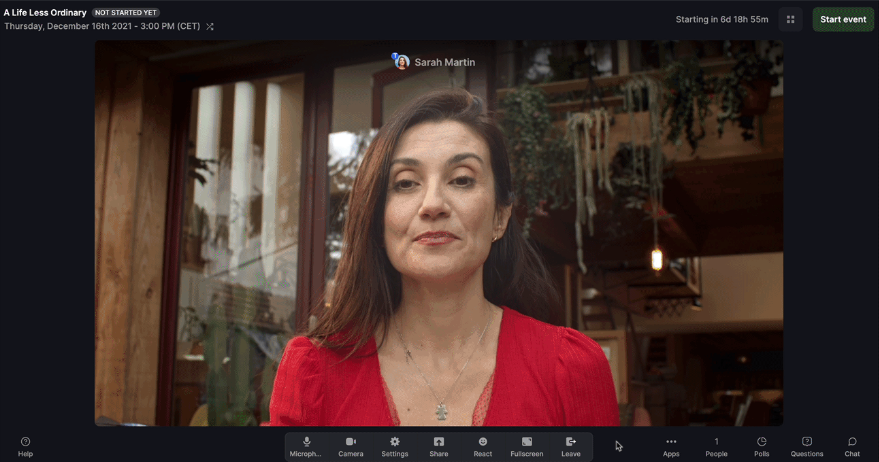
Livestorm becomes particularly relevant when the webinar exists to feed a larger B2B marketing and sales system. It combines webinar delivery with CRM-connected workflows, making the movement of registration and engagement data almost as important as the live event itself.
Restream connects strongly to social destinations. For B2B teams whose webinar programs exist to feed a CRM and marketing automation stack, Livestorm solves a different part of the workflow. No CSV export, no manual field mapping, no Zapier chain that breaks on a Friday afternoon before a Monday pipeline review.
That is where Restream starts to look narrower for B2B webinar teams. A social streaming stack can be excellent at reach, while marketing operations may still need a platform designed around registration, audience data, and what happens after the event.
Pros:
- Browser-based attendance avoids download friction.
- Pro includes unlimited events, recordings, and team members.
- CRM and marketing integrations support B2B campaign workflows.
- Credits apply to actual attendees rather than registrations.
- Enterprise adds deeper analytics, integrations, and support.
Cons:
- Several deeper integrations and analytics require Enterprise.
- Credit forecasting becomes important as webinar volume grows.
Pricing: Free plan is limited to 30 attendees and 20-minute sessions. Pro starts around $99/month, Premium around $299/month, and Enterprise is custom-priced above that.
4. GoTo Webinar
Best for Large, Recurring Webinar Programs
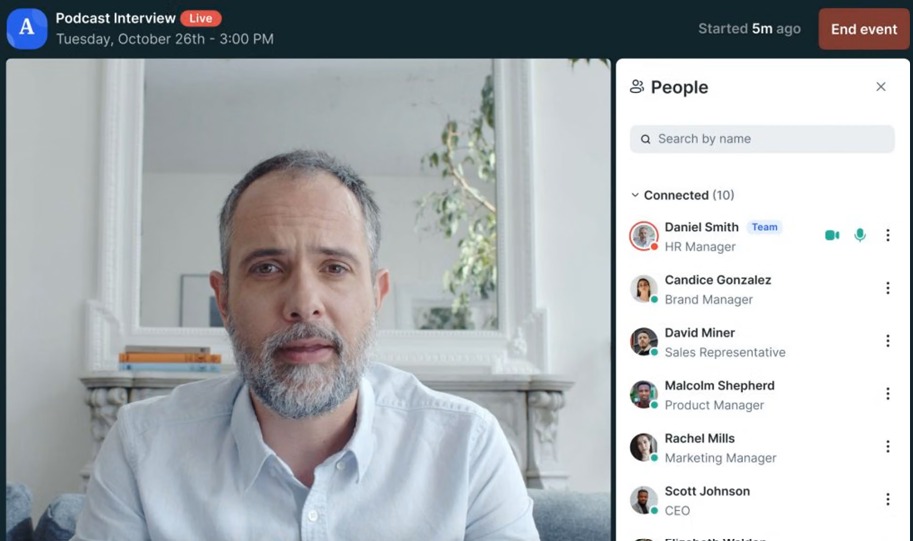
A webinar program with hundreds of attendees and a reporting deadline the next morning creates a very different problem from a social broadcast. Registration, reminders, Q&A, follow-up, and stakeholder reporting must all work the same way every time.
GoTo Webinar is built around that repeatable operation.
For teams that need to present performance data to leadership or clients after every session, that structured reporting layer removes a significant manual step. Good webinar management at scale starts with knowing what actually happened before, during, and after each session.
Pros:
- Supports webinar programs from 500 to 3,000 attendees, depending on plan.
- Built-in reporting provides structured attendee and event data.
- Automated reminders and follow-ups reduce administrative workload.
- Polls and live Q&A support audience participation.
- Higher plans add source tracking and larger event capabilities.
Cons:
- Several advanced capabilities sit above the entry-level plan.
- Complete requires a customized package.
Pricing: Plans start around $59/user/month for the Lite tier and scale to roughly $399-$499/month for Enterprise. A free trial is available.
5. Zoom Webinars
Best for Teams Already Standardized on Zoom
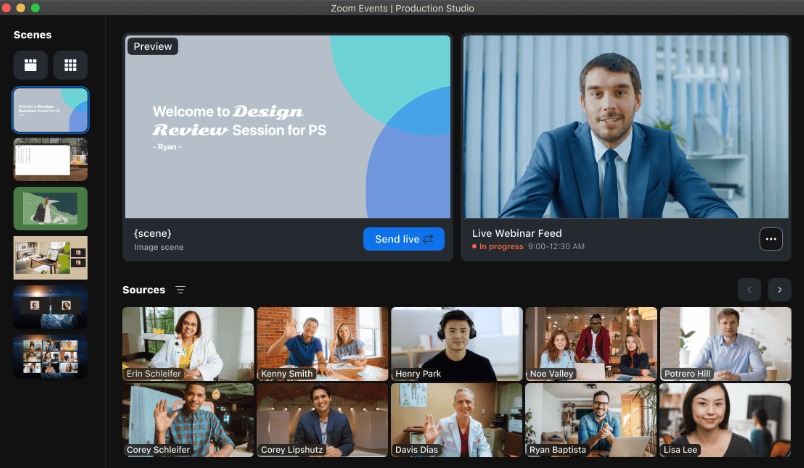
Zoom Webinars makes the most sense when the organization already lives inside Zoom. Presenters know the controls, internal teams already manage meetings and recordings there, and introducing the webinar does not require adding an entirely unfamiliar event environment.
Restream’s attendees often watch via whichever social destination streams it. Zoom takes a different route by bringing the audience into a dedicated, registered webinar environment. Teams can use registration, Q&A, polls, chat, reactions, recordings, branding, and reporting within a system that their speakers may already know.
The advantage is less about claiming zero friction and more about reducing the amount of new software an existing Zoom organization has to introduce.
Pros:
- Familiar environment for organizations already standardized on Zoom.
- Chat, reactions, polls, and Q&A support live interaction.
- Registration identifies attendees before the event.
- Webinar capacity can scale beyond smaller marketing programs.
- Recordings support post-event viewing and reuse.
Cons:
- Requires a Webinar add-on alongside an eligible Zoom license.
- Broader automated webinar funnels may require additional tools.
Pricing: Requires a paid Workplace license, plus the Webinars add-on starting around $66-$83/month.
6. eWebinar
Best for Automated and Evergreen Campaigns
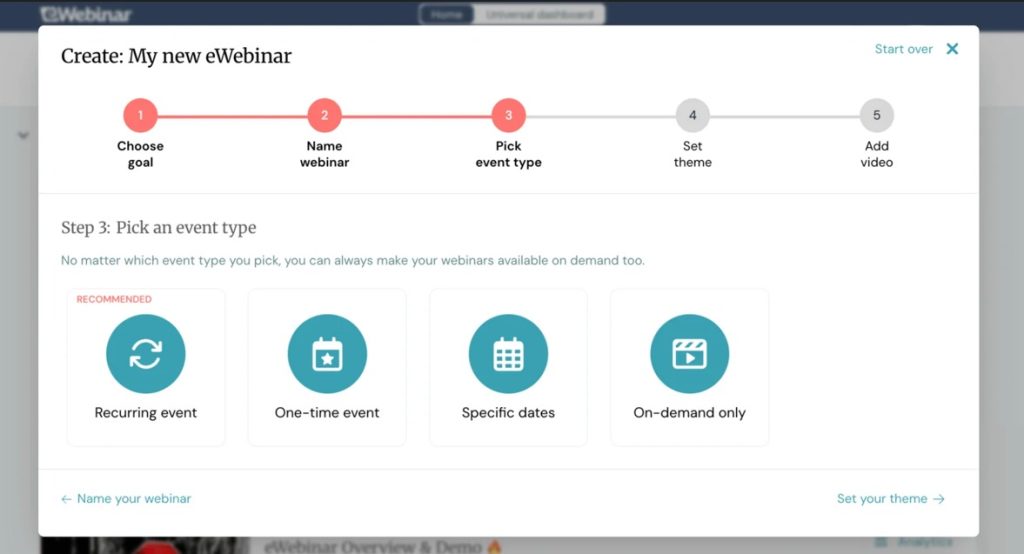
Restream is at its strongest when the team wants to go live and distribute the broadcast. eWebinar removes the need to bring someone live every time the same webinar runs.
Any recorded session becomes a scheduled or on-demand interactive webinar that runs without a live host present. Attendees choose a convenient time, join the session, and interact with elements placed throughout the recording. The session keeps generating registrations and delivering the presentation without anyone from the team having to show up to present it.
For teams running always-on lead-nurturing programs, client onboarding sequences, or product education webinars that need to operate continuously, eWebinar turns a single recording setup into a repeatable, automated delivery system.
Pros:
- Removes repeated live-hosting requirements from evergreen campaigns.
- Unlimited recurring sessions are included on standard plans.
- Attendees can choose more convenient viewing times.
- Interactive elements make prerecorded experiences more participatory.
- Unlimited team members support collaborative operations.
Cons:
- Built primarily for automated rather than traditional live webinars.
- Interactive and chat automation requires preparation before unattended delivery.
Pricing: Level 1 costs $99/month, Level 2 costs $199/month, and Level 3 costs $299/month. A 14-day free trial is available.
7. BigMarker
Best for Deep White-Label Webinar Delivery
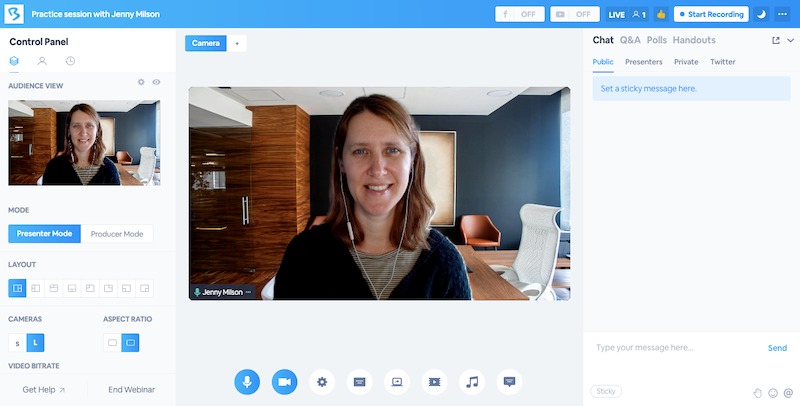
For some teams, adding a logo and changing a few colors is enough. For others, the entire webinar experience has to look like part of their own brand. BigMarker is aimed much more squarely at the second requirement, with deeper control over branded webinar and event experiences.
Its white-label offering can extend across landing pages, webinar environments, emails, domains, and other attendee-facing elements. For agencies running programs on behalf of clients, or businesses embedding webinar experiences inside a larger branded ecosystem, that level of control can matter more than pure multistreaming reach.
Pros:
- Enterprise white-label options support deeply branded webinar programs.
- Supports webinar and larger event experiences.
- Registration and attendee experiences can be customized extensively.
- Higher tiers support deeper CRM and reporting requirements.
- Suitable for larger strategic event programs.
Cons:
- White-label capabilities sit at higher service levels.
- More configuration than straightforward webinar campaigns may require.
Pricing: Starter is around $79/month for 100 attendees, Elite around $299/month for 500 attendees, with custom Enterprise pricing above that.
8. ON24
Best for Enterprise Demand Generation
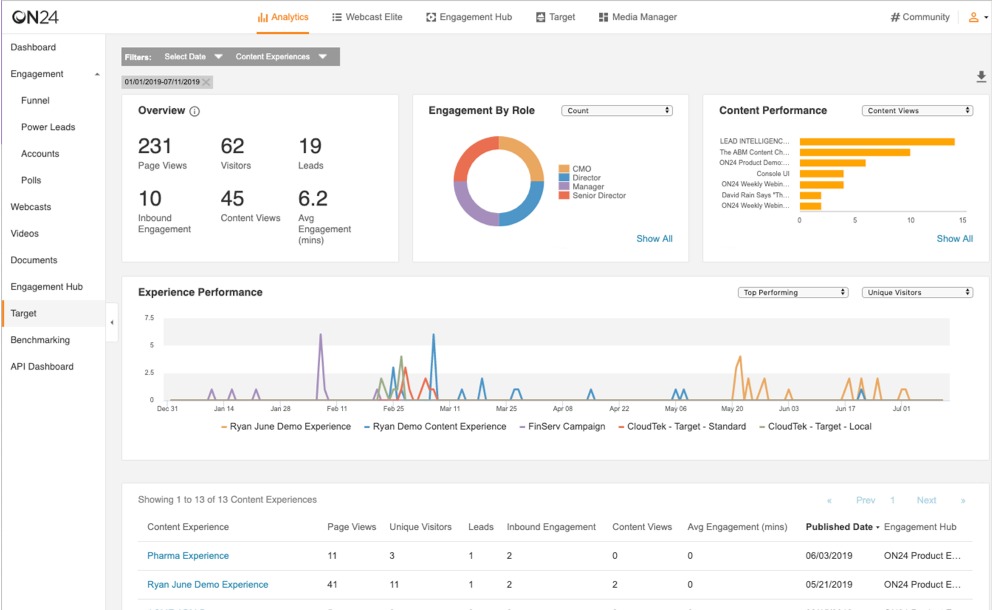
ON24 treats a webinar less as a broadcast and more as a first-party engagement channel within an enterprise demand-generation program.
That means the important output is not simply how many people watched. It is the content they engaged with, the actions they took, and how that activity should affect qualification, nurturing, and sales follow-up. Enterprise teams may want to know which attendees downloaded a resource, responded to a poll, clicked a CTA, or stayed long enough to justify another sales touch.
Restream’s broadcast analytics answer an important distribution question. ON24 goes further into how webinar interactions can feed larger marketing and revenue workflows.
Pros:
- First-party engagement data supports detailed prospect analysis.
- Content tools extend webinar programs beyond the live date.
- Designed for enterprise marketing and revenue workflows.
- Supports broader digital content experiences alongside webinars.
Cons:
- Pricing requires a sales conversation.
- Platform depth may be excessive for smaller webinar programs.
Pricing: Custom quotes only across Essentials, Standard, and Advanced tiers. Most organizations pay $25,000 to $100,000+ annually, with a median contract around $38,750.
9. Airmeet
Best for Community and Networking-Driven Events
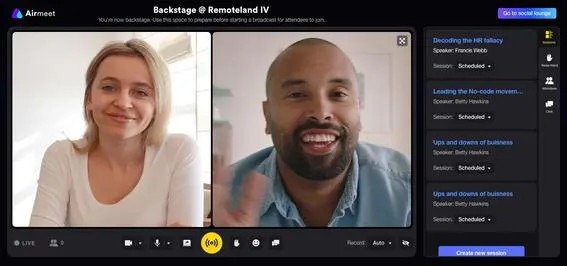
A community summit has a different job from a product broadcast. Attendees may want to meet each other, move between conversations, and participate in something that feels like an event rather than a stream. Airmeet is built around that kind of experience.
Networking features, larger event workflows, and multi-format experiences give attendees a reason to show up that goes beyond consuming content. When attendees can connect with each other during and around the session, the event becomes a community touchpoint rather than just a broadcast.
For teams building community-oriented marketing programs where connection matters as much as content, Airmeet serves a different role than Restream. Airmeet makes the most sense when networking and community experience sit at the center of the event, rather than when the primary need is a simpler end-to-end webinar campaign.
Pros:
- Advanced networking supports community-led webinars and events.
- Live, simulive, and on-demand formats support different strategies.
- Analytics and reporting support post-event review.
- Larger plans extend into broader event experiences.
- Monetization supports ticketed programs and sponsorships.
Cons:
- Networking-heavy functionality can overcomplicate simple webinars.
- Larger event requirements move into higher packages.
Pricing: Premium Webinars start at $167/month when billed annually. Larger event and agency offerings use separate packages.
10. StreamYard
Best for Browser-Based Live Streaming With Production Depth
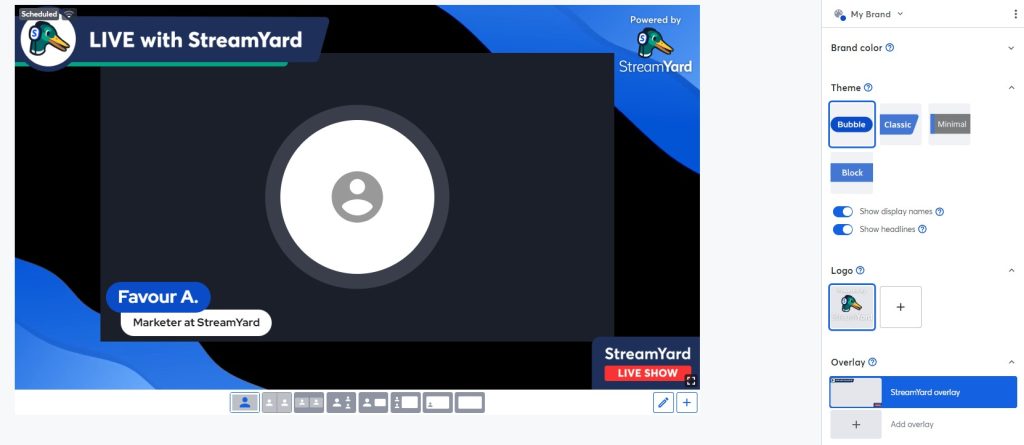
StreamYard is one of Restream’s closest alternatives when the real requirement is still browser-based multistreaming rather than a full webinar marketing system. Both platforms let you bring guests in via a browser, manage branded production elements, and distribute a single live broadcast across multiple destinations.
StreamYard’s paid plans expand destination limits, branding, production controls, local recording, and other studio functionality. Its Advanced tier also includes On-Air webinars, so it would be inaccurate to say StreamYard has no webinar capability.
For teams that want Restream’s core use case, browser-based live streaming to multiple platforms, but prefer StreamYard’s production workflow, it is the honest next step before committing to a full webinar platform.
Pros:
- Browser-based production keeps host and guest workflows simple.
- Supports multistreaming across several destinations.
- Strong branding and production controls.
- Local recording is available on higher plans.
- Advanced includes On-Air webinar functionality.
Cons:
- On-Air webinars require a higher plan.
- Teams needing deeper webinar automation may still need a webinar-focused platform.
Pricing: Free is available. Core starts at about $35.99/month, while Advanced starts at about $68.99/month.
My Evaluation Criteria
Every tool in this list was assessed using a consistent framework drawn from analysis of real buyer conversations, verified reviews on G2 and Capterra, and a hands-on review of platform documentation. Here is what went into each review.
User Reviews and Ratings:
Every entry here was checked against verified user feedback on G2, Capterra, and TrustRadius, rather than relying on vendor claims alone, including ProProfs WebinarNinja’s own 4.2-star rating across 200+ verified Capterra reviews.
Essential Features and Functionality:
The value of a platform is measured against what business webinar programs actually need. Distribution reach is one factor. Registration, lead capture, attendee analytics, automated follow-up, and CRM integration are the others. Every tool was assessed across all of them.
Ease of Use:
The user-friendliness of both the host interface and the attendee-facing experience. A platform that creates friction at the join step or the setup stage costs time that compounds across every event on the calendar.
Customer Support:
The quality and responsiveness of support at setup, during live events, and when something goes wrong mid-session.
Value for Money:
Feature coverage relative to price point, including which capabilities are gated behind higher tiers and how the platform scales with event volume and audience size.
Industry Analysis and Expert Commentary:
Publicly available analyst commentary and independent comparisons across the webinar and live streaming software space, including Restream’s own positioning as it expands its feature set.
Why Look for a Restream Alternative?
Restream makes a lot of sense when the primary goal is to get a single live stream in front of audiences across multiple destinations. The reasons to look elsewhere usually appear when the broadcast itself stops being the end goal.
You start needing a registered audience rather than just platform viewers. Marketing wants attendee behavior that can influence follow-up. Sales wants a cleaner handoff. And the session needs to keep producing value after the live stream disappears from the feed.
Three gaps become more noticeable as the webinar becomes a business workflow rather than just a broadcast.
Social Reach and Webinar Identity Are Different
Restream’s Webinar add-on now collects attendee names and email addresses on a dedicated webinar page, so saying Restream cannot identify webinar attendees at all would be outdated.
The distinction appears when the main event is still a regular social multistream. Someone watching the LinkedIn or YouTube broadcast exists primarily inside that destination’s audience data. That is useful for understanding reach, but it is not the same as building the session around your own webinar registration workflow, where the marketing journey starts before the attendee ever enters the room.
Follow-Up Needs More Than Replay Access
The webinar ends. The recording exists. That does not mean the campaign is finished.
Marketing may still need one message for attendees, another for no-shows, a different action for someone who clicked an offer, and a faster handoff for someone who asked a buying question. Restream’s Webinar add-on now provides replay access, which reduces manual work. But replay delivery is only one piece of a wider nurture workflow.
This is where ProProfs WebinarNinja starts to separate itself from a streaming-first setup: registration, email automation, live engagement, replay, analytics, and integrations are built into the same webinar workflow rather than assembled afterward.
Broadcast Analytics and Webinar Analytics Answer Different Questions
A stream can perform well and still tell marketing very little about what to do next. Views, peak viewers, chat activity, and channel performance answer:
How did the broadcast perform?
A marketing-led webinar analytics workflow asks another question:
What did each registered attendee do, and what should happen next?
That can include registration-to-attendance rates, replay behavior, poll responses, question responses, offer clicks, and other engagement metrics that help marketing and sales decide how to follow up.
The closer the webinar gets to the pipeline, the more important that distinction becomes.
How Should Webinar Data Move After the Broadcast?
A webinar can finish successfully and still leave the team with a mess five minutes later. The registrant list sits in one place. Poll responses live somewhere else. Someone has to export attendance, clean the file, push it into the CRM, and then decide who gets what follow-up.
That is the gap a stronger webinar workflow should remove.
1. Registration Data Creates the Audience Record
The workflow starts before anyone joins. Name, email, source, and campaign details create the first usable audience record. That means the team knows who is coming before attendance or engagement data even exists.
2. Engagement Data Adds Context
Attendance alone is not enough. A person who joins for six minutes is not the same as someone who stays until the offer, answers a poll, asks a buying question, and returns for the replay. That behavior is what makes webinar data useful.
3. CRM Handoff Connects the Webinar to the Pipeline
The next problem is movement. For one team, that may mean HubSpot. For another, it may mean a different CRM, email platform, or automation workflow.
The important part is not simply having an integration. It is making sure the webinar data reaches the system, where sales and marketing have already decided what happens next.
4. Follow-Up Turns Data Into Action
This is where the workflow either works or breaks. An engaged attendee may need a sales conversation. A no-show may need a replay. Someone who clicked an offer may need a different follow-up from someone who barely stayed.
A segmented webinar follow-up email workflow helps turn those differences into the next action, rather than sending everyone the same message.
This is where ProProfs WebinarNinja becomes useful as the broader option: registration, engagement, replay, email workflows, analytics, and integrations can remain connected rather than becoming separate post-event tasks.
My Top 3 Restream Alternative Picks
If you do not want to read the full comparison, here is the short version:
1. ProProfs WebinarNinja
The only platform on this list where AI covers the full webinar lifecycle: registration copy, pitch coaching, live chat management, and post-session content repurposing, all while publishing transparent, flat pricing you can see before ever talking to a salesperson. It does everything Restream promises for business webinars, plus everything Restream cannot do: registered attendees, automated follow-up, CRM integration, and per-attendee analytics.
2. eWebinar
If your goal is to run webinars as an always-on lead generation asset without requiring a live host for every session, eWebinar is purpose-built for exactly that. Record once, run forever. The highest G2 rating on this list, at 4.9/5, reflects how consistently it delivers on that promise.
3. StreamYard
If what you actually need is Restream’s multistreaming capability with a better production environment, StreamYard is the honest next step before committing to a full webinar platform. It does not solve the registration and CRM gaps, but it solves the production depth gap that Restream users most commonly cite.
Ready to Pick the Best Restream Alternative?
The right Restream alternative depends on the specific gap. If you need a broader social reach, Restream delivers that well. If you need registered attendees, CRM-connected data, and automated follow-up, a multistreaming tool is not the right infrastructure for that job.
Most teams searching for Restream alternatives start with one missing capability and realize they need a platform built around webinars as a lead-generation and content engine, not just distribution.
That is why ProProfs WebinarNinja is the top pick on this list. It does not ask you to choose among live-streaming reach, webinar automation, and content repurposing. It gives you all three, along with live, automated, series, and hybrid formats, built-in registration pages, AI-powered content repurposing, and free course delivery in one account.
Frequently Asked Questions
How much do Restream alternatives typically cost?
Pricing spans a wide range. Attendee-based platforms like ProProfs WebinarNinja start at $0.30/attendee/month. Mid-market tools like Demio and GoTo Webinar run from $49 to $79/month. StreamYard starts at $49/month with a free plan available. Enterprise platforms like ON24 and BigMarker use custom pricing that typically starts in the thousands per year.
What is the main difference between Restream and a dedicated webinar platform?
Restream distributes a live stream to multiple social platforms and generates view counts across those destinations. Dedicated webinar platforms like ProProfs WebinarNinja identify every attendee through registration, track per-person engagement throughout the session, and automate follow-up and CRM sync after it ends. The difference is clearest in whether your event generates a view count or a lead list.
Do Restream alternatives require attendees to download software?
Most do not. ProProfs WebinarNinja, Livestorm, Demio, and StreamYard all run in the browser, with no downloads required for attendees. Zoom Webinars may require an app, depending on the device and plan.
Is there a Restream alternative with transparent, published pricing?
Yes. ProProfs WebinarNinja, Demio, Livestorm, GoTo Webinar, eWebinar, and StreamYard all publish at least entry-level pricing online. ON24, BigMarker, and Airmeet's higher tiers require a sales conversation before pricing is shared.
Which Restream alternative works best for lead generation and sales webinars?
ProProfs WebinarNinja is built specifically around that use case, with registration pages, automated follow-up email sequences, AI-powered content repurposing, and post-webinar analytics in one account. For a detailed look at how to build a lead generation webinar program from the ground up, see this guide onwebinar lead generation strategies.
Can Restream alternatives also multistream to social platforms?
Some can. GoTo Webinar supports live streaming to Facebook, YouTube, and LinkedIn from within the platform. Zoom Webinars supports streaming to YouTube. ProProfs WebinarNinja, Demio, and Livestorm do not currently support native multistreaming to social platforms, but they cover the full lead-generation webinar lifecycle that multistreaming alone cannot.
Can Restream alternatives automate webinar follow-up?
Yes. ProProfs WebinarNinja can automate confirmation, reminder, follow-up, and replay emails from the same platform. That helps teams move from registration to post-webinar nurturing without manually exporting attendee lists or rebuilding the workflow in a separate email tool.
Can Restream alternatives support both webinars and online courses?
Yes. ProProfs WebinarNinja includes CourseNinja, so teams can run webinars and structured courses from the same account. This is useful when a webinar needs to lead into customer education, onboarding, training, or a longer learning program, rather than ending after the live session.
Want to host a webinar for free?
Use WebinarNinja to teach, improve marketing, and grow your sales.